How to Do Arts Integration in Your Homeschool
Okay, so we’ve all seen the buzzwords: cross-curricular! hands-on! whole child! But when you’re knee-deep in spelling lists, math facts, and that science kit you still haven’t opened, figuring out how to actually integrate art into your homeschool might feel like just one more thing.
Good news: it’s not. In fact, when you do arts integration well, it makes everything else easier.
In this post, I’ll walk you through how to do arts integration without burning out, why it works, and a bunch of examples that are simple, meaningful, and (best of all) fun.
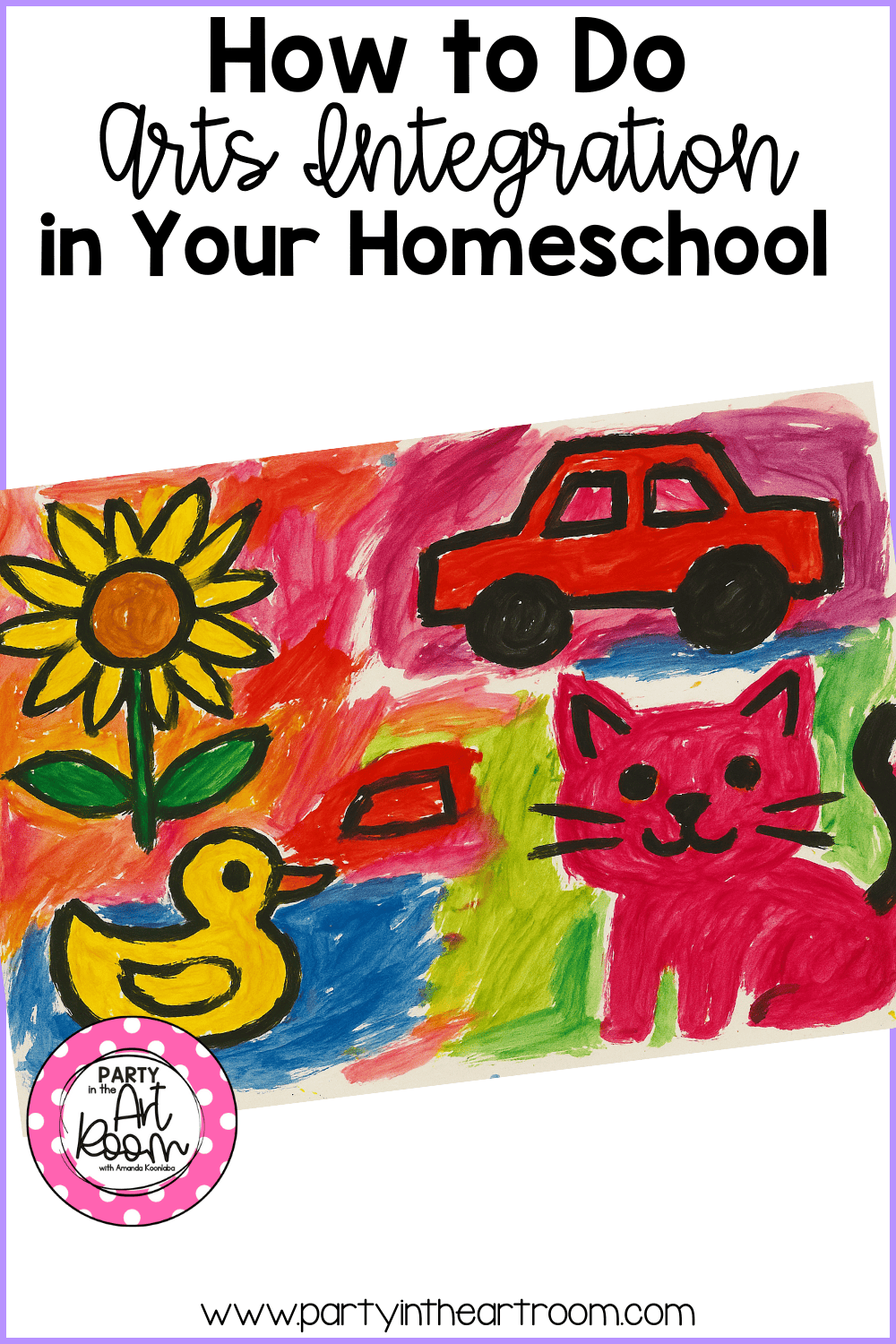
Arts integration starts with simple creative choices that invite kids to connect ideas across subjects.
What is Arts Integration, Really?
It’s just a fancy way of saying you’re teaching academic concepts through the arts. It’s not “art as a treat,” and it’s not “art as a break.” It’s art as a vehicle for deep learning.
So when we say we’re integrating art and science, we don’t mean we color a science worksheet. We mean we explore plant anatomy by creating watercolor botanical illustrations. See the difference?
Why You Should Bother with Arts Integration in Your Homeschool
● It improves retention. When kids draw, sculpt, or act out what they’re learning, they remember it better.
● It supports multiple learning styles. Visual learners, kinesthetic learners, you name it—they all get something from integrated lessons.
● It builds confidence. Kids feel successful when they create. That success spills into other subjects.
● It’s more joyful. Learning sticks when it’s fun.
Real-Life Examples of Arts Integration in My Homeschool
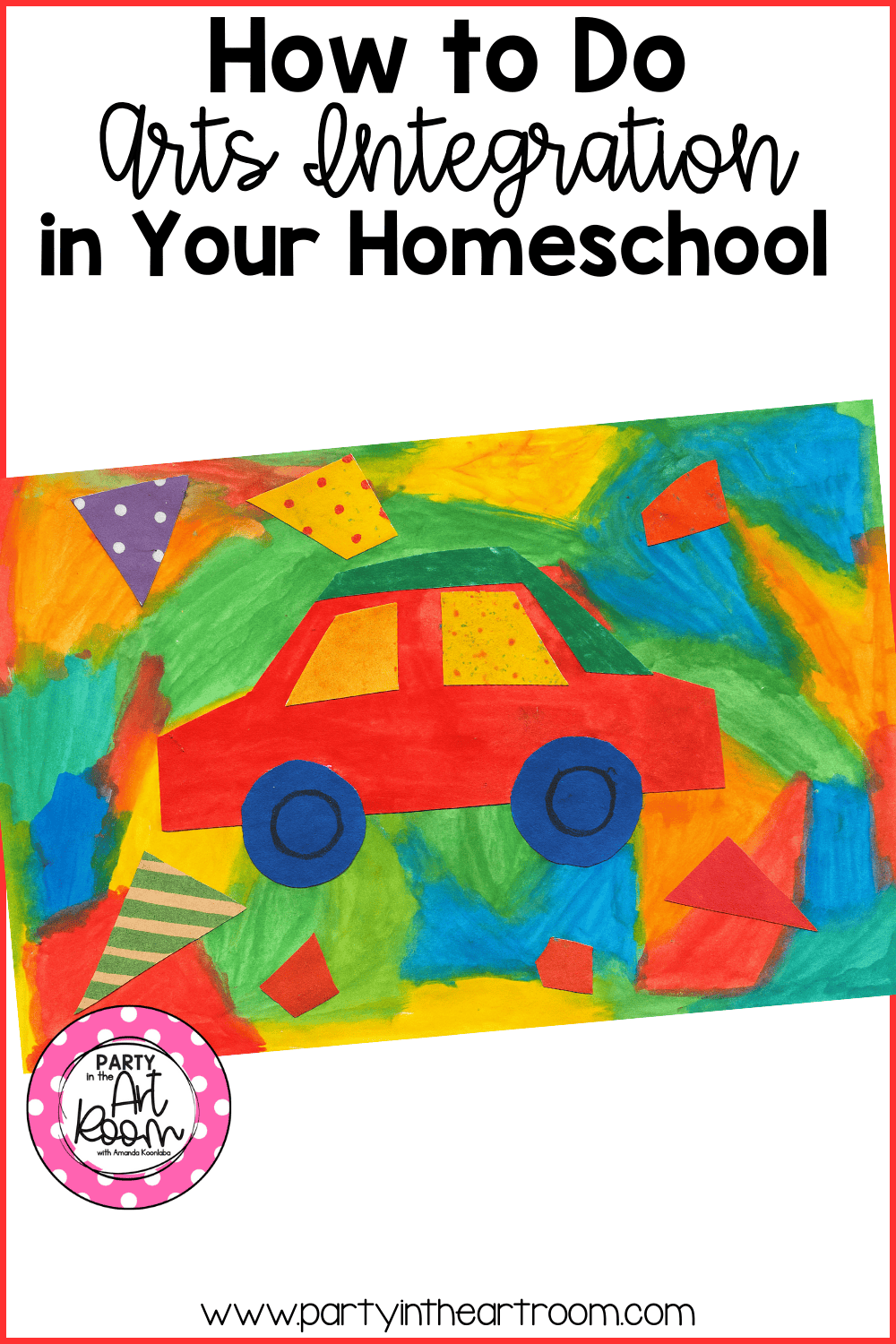
Open-ended art projects help children express academic ideas through visual thinking and creativity.
Art + Science
● Use oil pastels and baby oil to explore texture and the differences between oil- and water-based media
● Sculpt Plaster Animal Masks and talk about adaptations
● Create a mixed-media weather collage with paint and tissue paper
Art + History
● Use the Cow Skull Dice Roll Game to explore Georgia O’Keeffe and talk about the American Southwest
● Make colonial silhouette portraits with black paper and scissors
Art + Language Arts
● Draw a character from your read-aloud and write a new story about them
● Do Peter Rabbit Monoprinting after reading Beatrix Potter’s story, then narrate the scene in their own words
How to Set It Up Without Losing Your Mind
Here’s the thing—you don’t need a new curriculum. You just need to shift how you think about your lessons.
Start with the subject you already plan to teach. Ask:
● How could we represent this visually?
● Could we act it out?
● Could we build, paint, or sculpt something that shows what we’ve learned?
Then keep a basic stash of materials on hand:
● Watercolors + brushes
● Tissue paper
● Construction paper
● Recyclables (boxes, tubes, cardboard)
Keep It Manageable: The Rule of One
If you’re new to this, start with the Rule of One:
● One integrated subject per week
● One art material
● One finished product
So maybe this week, you focus on science. You use watercolor to paint the life cycle of a frog. Boom—art + science. Keep it light. Keep it doable.
Ready-to-Use Resources
If you want to try this but don’t have time to plan it all yourself, start here:
All three include natural connections to literacy, history, or science. You just plug and play.
Final Thoughts: You’re Already Doing It
If you’ve ever asked your kids to draw a scene from a book, act out a moment from history, or color a diagram of a plant, congratulations—you’re already integrating the arts.
Arts integration isn’t about perfection. It’s about connection.
So grab some pastels, pick a lesson, and start small. Your kids will thank you. (And so will your future self.)
More GREAT IDEAS:


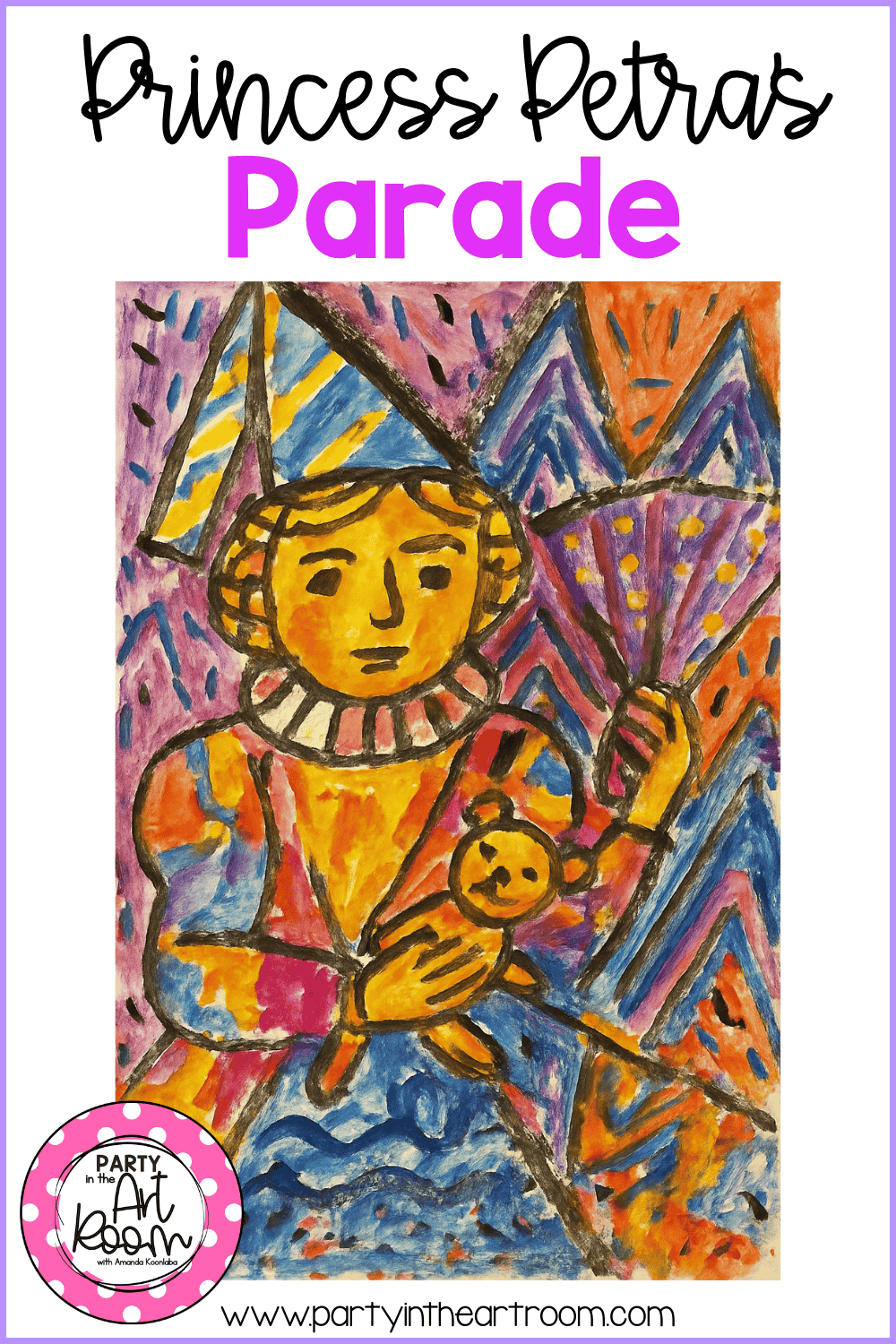


Designed specifically for classroom use, these worksheets provide a template for your students to explore the concepts of tints and shades while developing their artistic skills. Whether you're looking for a way to enhance your art curriculum or just want to inject some creativity into your classroom, these worksheets are sure to inspire your students!

Check out discounts, deals, and recommendations on all our artsy faves!
Affiliate Disclosure: Party in the Art Room is supported by its audience. When you purchase through links on this site, a commission may be earned.
Get to know Amanda Koonlaba!
Hi! I’m Amanda. Teaching children to be creative thinkers is my greatest joy. I’m here to help you bring that same joy to your classroom.

This guide is packed with 25 ideas for using art to teach math and ELA. It’s arts integration for the win!
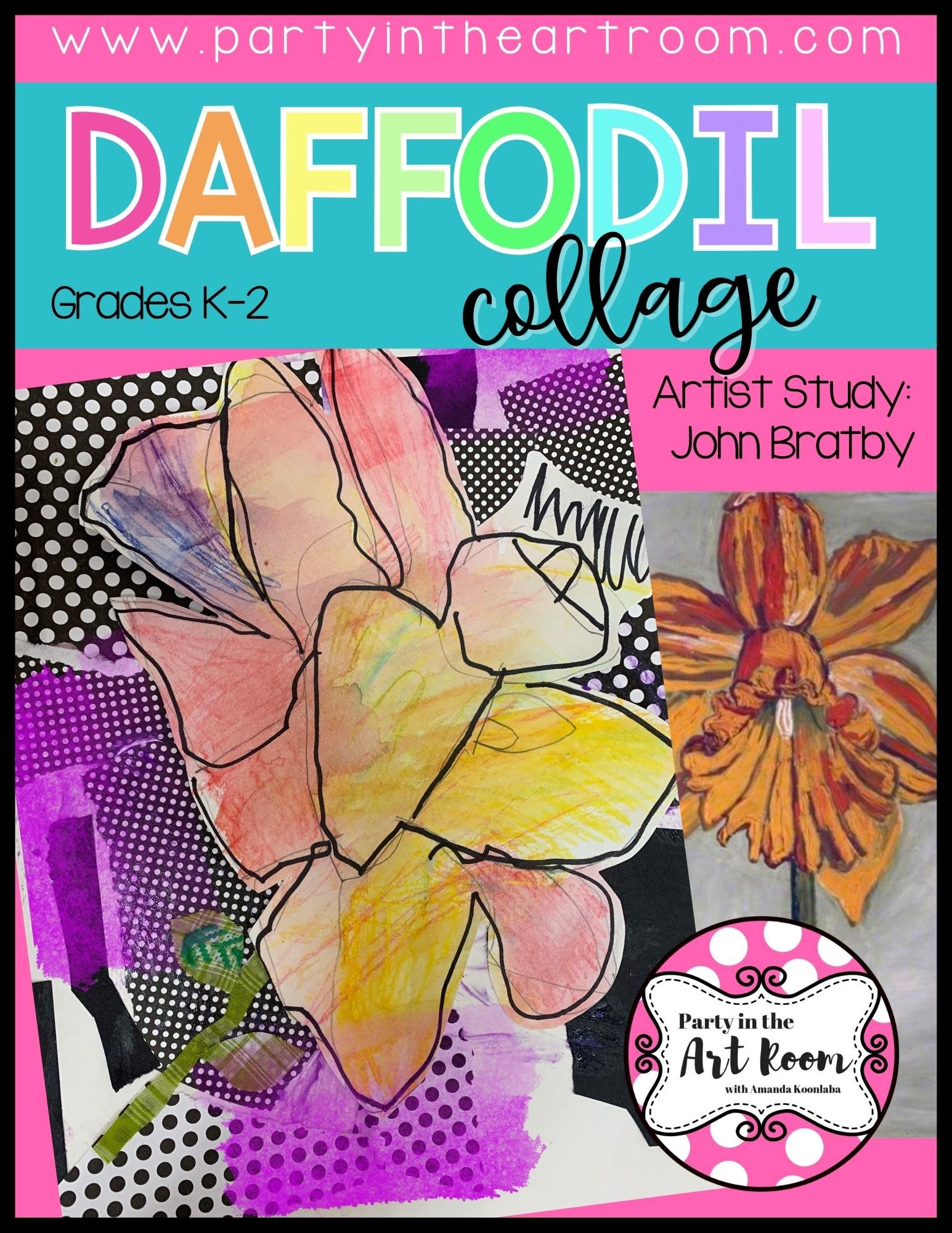
I want all students to feel successful in the art room, so I created a standards-based Daffodil Collage lesson to do just that! The lesson includes an artist study, student reflection, and more, so push your artists to their full potential.


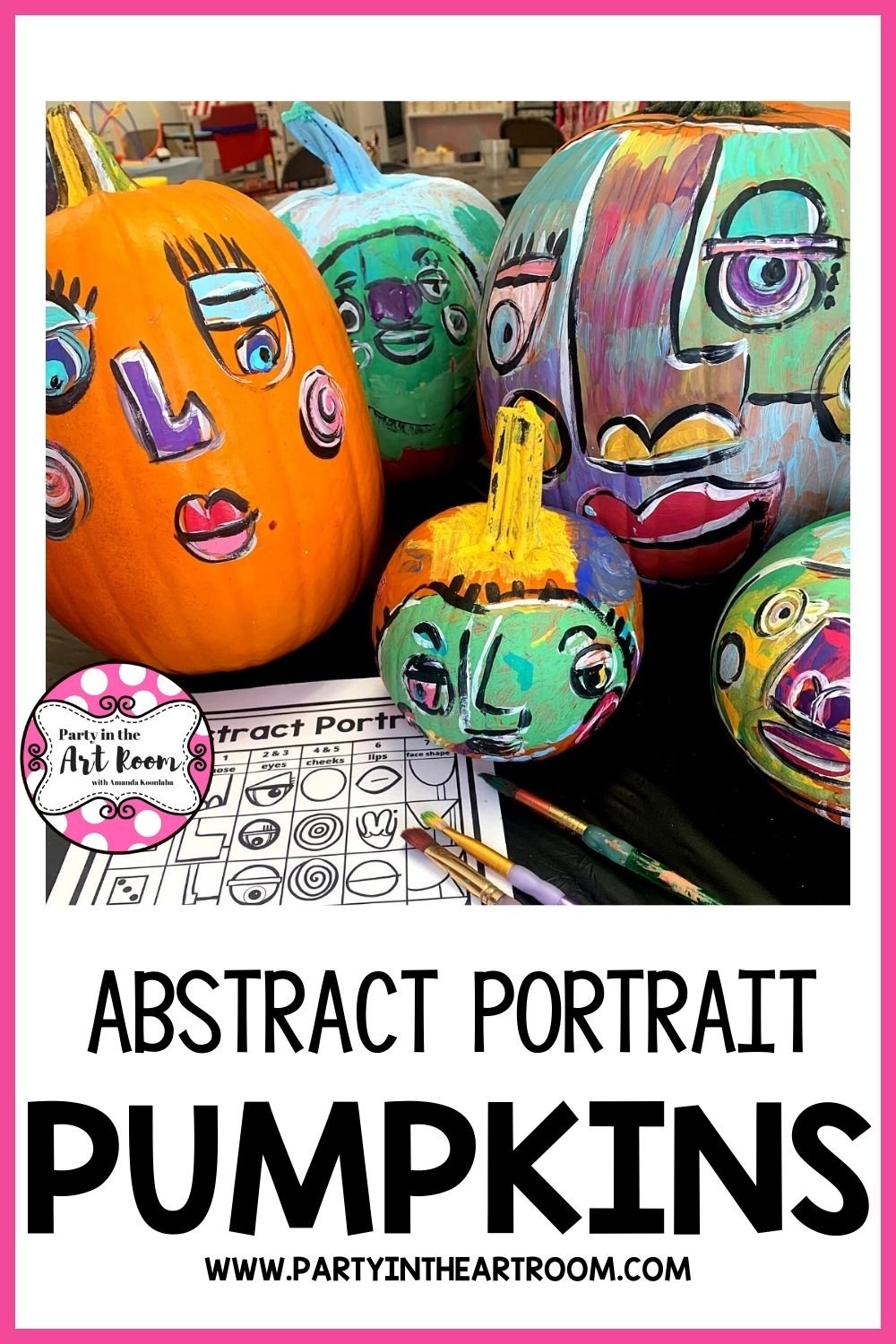
Are you planning an abstract art lesson inspired by Paul Klee? Are your students going to create abstract portraits? Here’s an engaging and vibrant lesson to enhance your curriculum! This resource is an ideal addition to your elementary art plans, bringing creativity and excitement to your classroom.
Transform your classroom into a desert oasis with Party in the Art Room's engaging cactus watercolor lesson exploring warm and cool color relationships.
Students discover color theory through guided cactus drawings while developing watercolor techniques that bring their desert landscapes to life. This comprehensive desert cactus art lesson combines Master Works analysis with hands-on creation, building confidence through structured artistic exploration.
Warm and cool color study with watercolors
Guided drawing instructions included
Standards alignment and assessments provided
Master Works analysis for deeper learning
Student and teacher reflection sheets
Unlike simple cactus crafts, this desert cactus art lesson teaches line, shape, pattern, and texture while students create gallery-worthy desert artwork perfect for stunning hallway displays.
Add to Cart for vibrant desert creativity.