What Is Creativity First?
If you’ve ever walked into a room where the walls were buzzing with color, the floor was dotted with paint splatters, and a student looked up from their project and said, “Wait, math can do this?”—then you’ve seen Creativity First in action.
Creativity First isn’t just about making things pretty (although, let’s be real, we love that too). It’s about using art-making to deepen understanding in core academic subjects and support the whole child. It’s flexible, exploratory, rooted in standards, and—maybe most importantly—it’s FUN.
Let’s walk through what Creativity First looks like and how these strategies are showing up in the work my students are creating. Plus, I’ll share how you can bring in movement, music, and storytelling without needing a degree in dance or Broadway experience. Promise.
First, What Is Creativity First?
Here’s the definition I use with the Creativity First methodology:
Creativity First integrates the arts into academic subjects to deepen understanding, boost creativity, and enhance engagement. This method supports the whole child by emphasizing the creative process and fostering both intellectual and emotional development.
In simple terms: it’s the magic that happens when you combine art standards with academic content, give kids room to explore, and let their creativity drive the process.
There are 6 key attributes:
Standards-Based
Creative Process-Oriented
Rich in Arts Vocabulary
Built Around High-Quality Discussion
Exploratory and Open-Ended
Centered on Reflection
Let’s break that down with some juicy, colorful student work.
🎨 These Student Artworks Are Creativity First
1. Salt and Color Shape Experiments
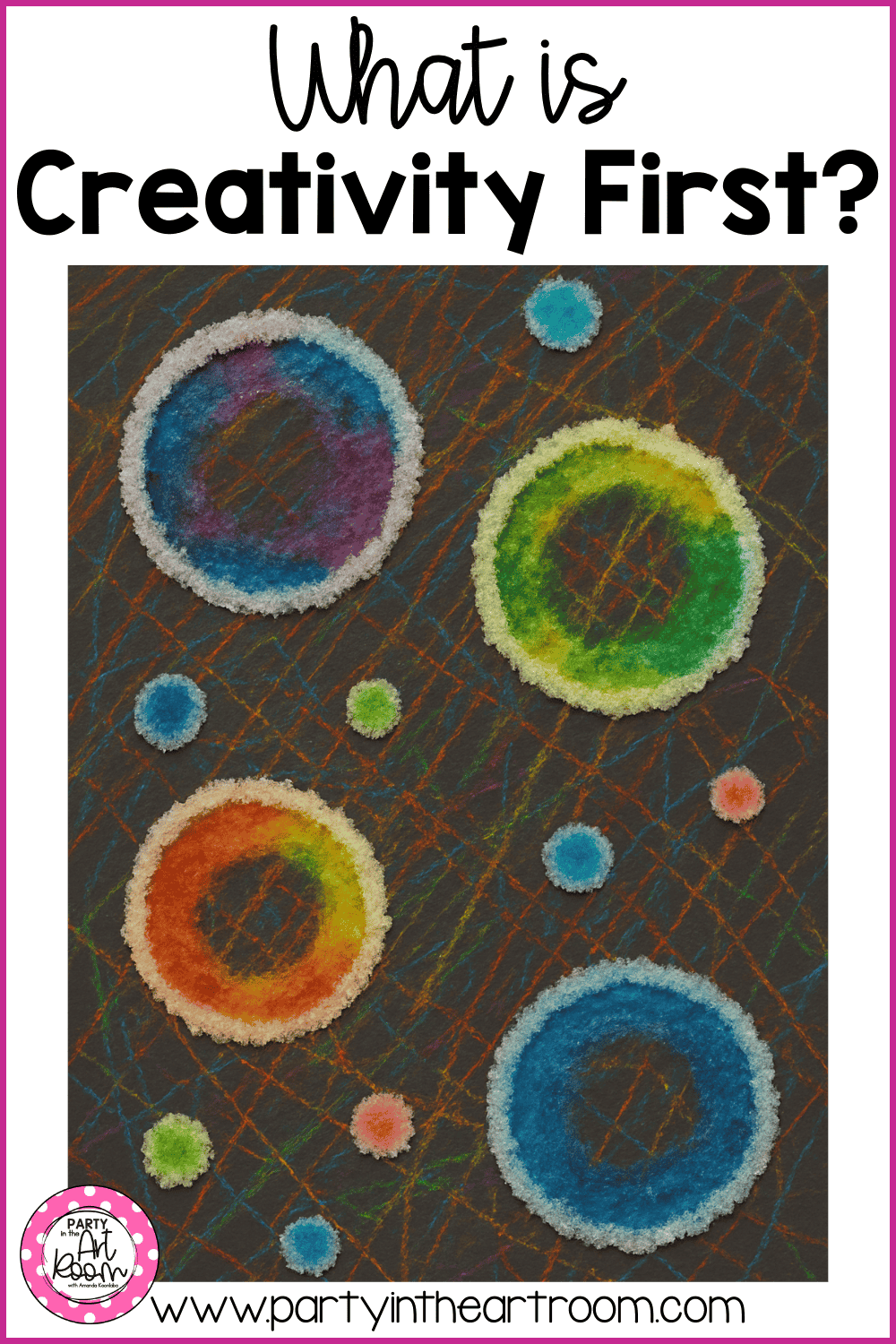
Salt, watercolor, and glue lines created textured shapes that invited students to slow down, observe absorption, and reflect on color and pattern choices.
These textured beauties are part science, part geometry, and all-out sensory fun. Students used salt and watercolor on glue lines to create dynamic shapes, then layered oil pastel patterns underneath.
Along the way, they:
● Practiced line, color blending, and pattern
● Learned about saturation, absorption, and resistance
● Used math vocabulary like radius, symmetry, and geometric terms
● Reflected on which color combos and line types created the most “pop”
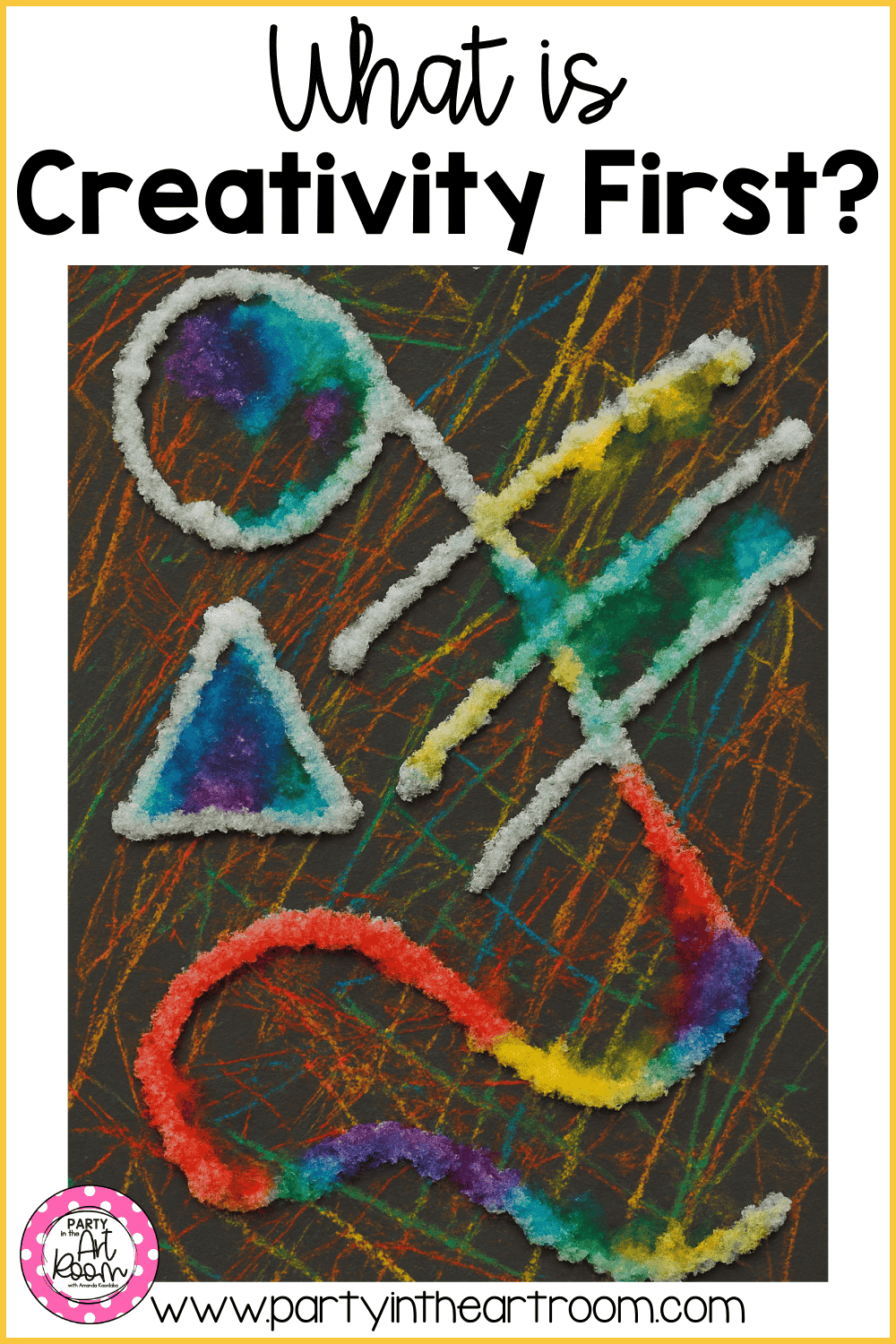
This abstract form shows how students combined texture and color to refine shapes and reflect on which visual choices created the strongest impact.
Yes, we talked about absorption and surface tension, y’all. And they loved it.
2. Color + Shape Collage Chaos
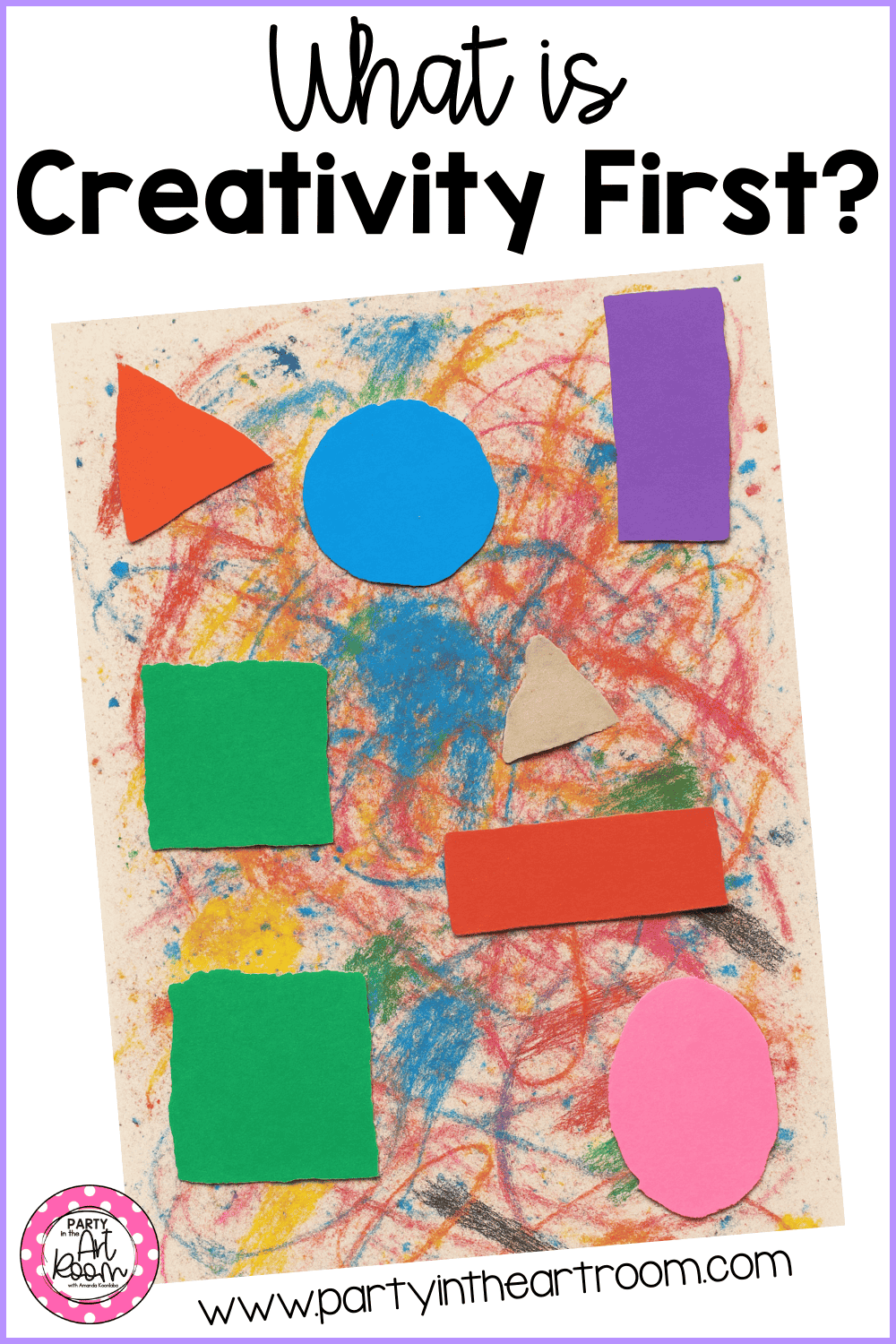
Students explored balance and visual weight by layering cut paper shapes over an expressive scribble background and reconsidering their first design choices.
This process art project started with a good ol’ scribble fest—because every kid deserves a little crayon therapy now and then. Then we layered cut paper shapes and asked: “What’s happening with balance here? Which shapes feel heavy? Why?”
We pulled in visual art standards about composition and ELA concepts like main idea vs. supporting details—with each shape being a detail layered over the main “background.” Cue critical thinking.
3. Toy Car Color Trails
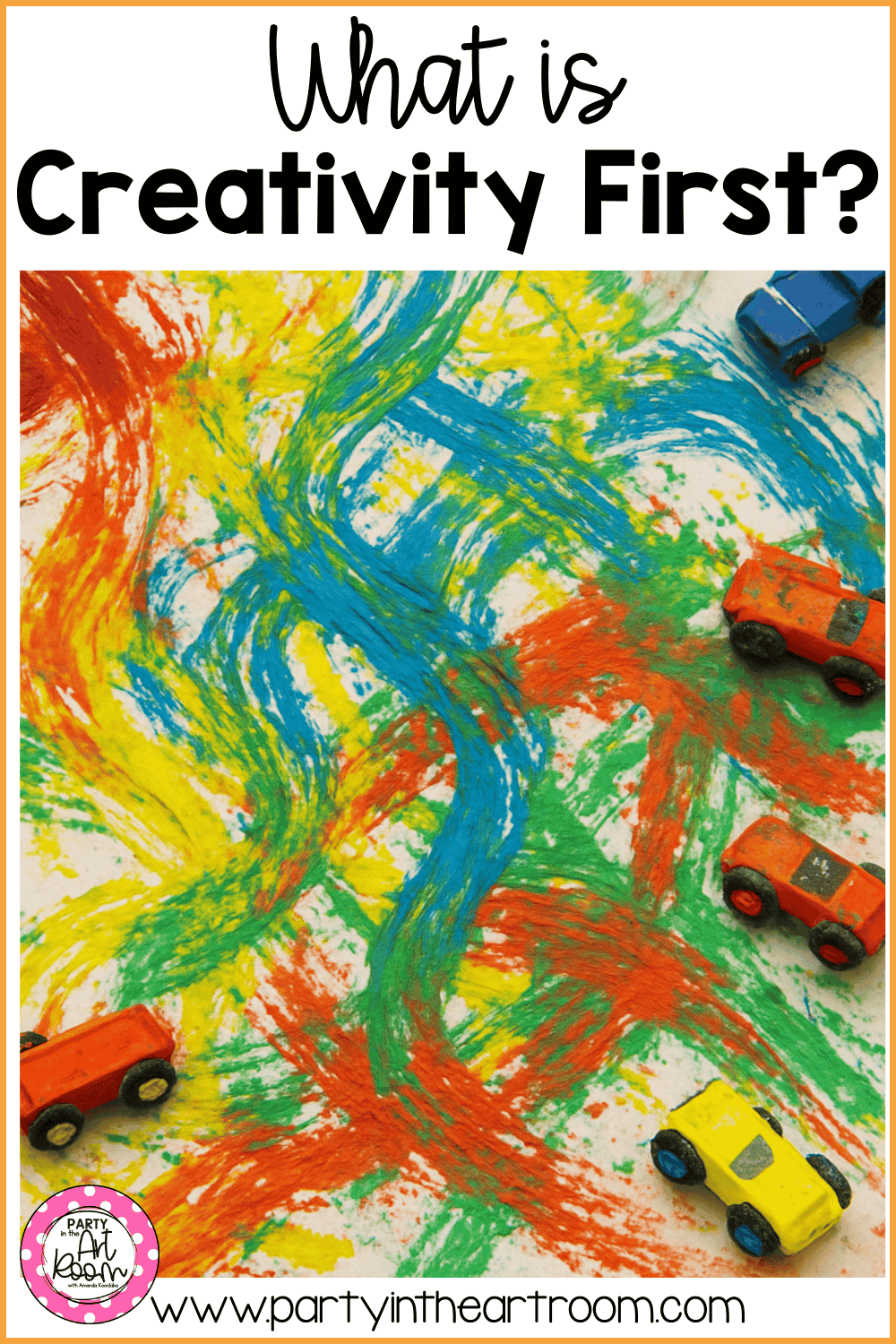
Rolling toy cars through paint turned movement into visible lines, helping students connect motion, direction, and cause and effect through art.
This one’s a crowd favorite. Students rolled toy cars through trays of paint and created kinetic masterpieces. You can feel the motion in the final artwork. We connected this to:
● Forces and motion in science
● Line direction and color mixing in art
● And even a little writing prompt action: “Describe the path your car took using verbs and prepositions!”
Pro tip: If you ever want 100% participation, say the words “paint” and “cars” in the same sentence.
🩰 Integrating Movement, Music, and Storytelling
Creativity First doesn’t stop with crayons and glue. Here’s how you can fold in other creative modalities:
🎭 Theatre & Storytelling
● Act out vocabulary words or historical scenes
● Create “tableaus” (frozen scenes) to represent parts of a story or scientific cycle
● Use puppets or shadow theatre for retelling or sequencing events
🕺 Dance & Movement
● Have students become shapes, punctuation marks, or even molecules
● Use movement to model processes like erosion, plant growth, or animal migration
● Let kids choreograph transitions between ideas in a presentation
🎶 Music
● Use rhythm to teach syllables, skip counting, or patterns
● Match songs to moods in literature or visual art pieces
● Let students compose soundtracks to go along with their own artworks
You don’t have to be a dancer, actor, or musician to do this. You just need to let kids use their bodies, voices, and creativity to show what they know.
Final Thoughts: Why It Matters
Creativity First isn’t a “nice to have.” It’s a need to have. When kids get to move, create, reflect, and explore, they remember more, stay engaged longer, and develop the kind of problem-solving and flexible thinking skills we want them to carry for life.
And the best part? It’s joyful. It’s human. It’s how we’re wired to learn.
Now go forth and get messy. 🎉
You Might Also Be Interested In:
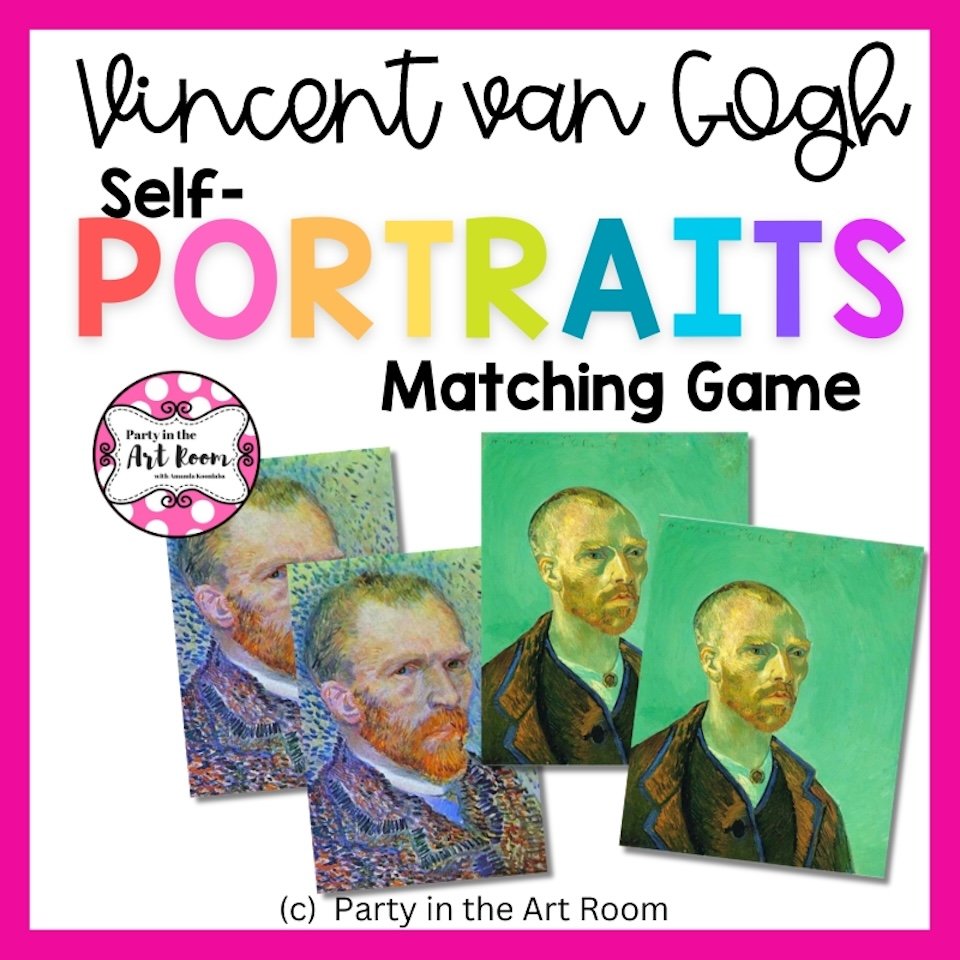
Inside this free PDF, you'll find a treasure trove of van Gogh's self-portraits, each capturing the essence of the artist's unique style and introspection. From his early works to his later masterpieces, this collection showcases the evolution of van Gogh's self-representation throughout his remarkable career.
As students pair the self-portraits, they will develop visual recognition skills, explore color and brushstroke techniques, and gain a deeper understanding of van Gogh's artistic journey.

Check out discounts, deals, and recommendations on all our artsy faves!
Affiliate Disclosure: Party in the Art Room is supported by its audience. When you purchase through links on this site, a commission may be earned.
Get to know Amanda Koonlaba!
Hi! I’m Amanda. Teaching children to be creative thinkers is my greatest joy. I’m here to help you bring that same joy to your classroom.

This guide is packed with 25 ideas for using art to teach math and ELA. It’s arts integration for the win!
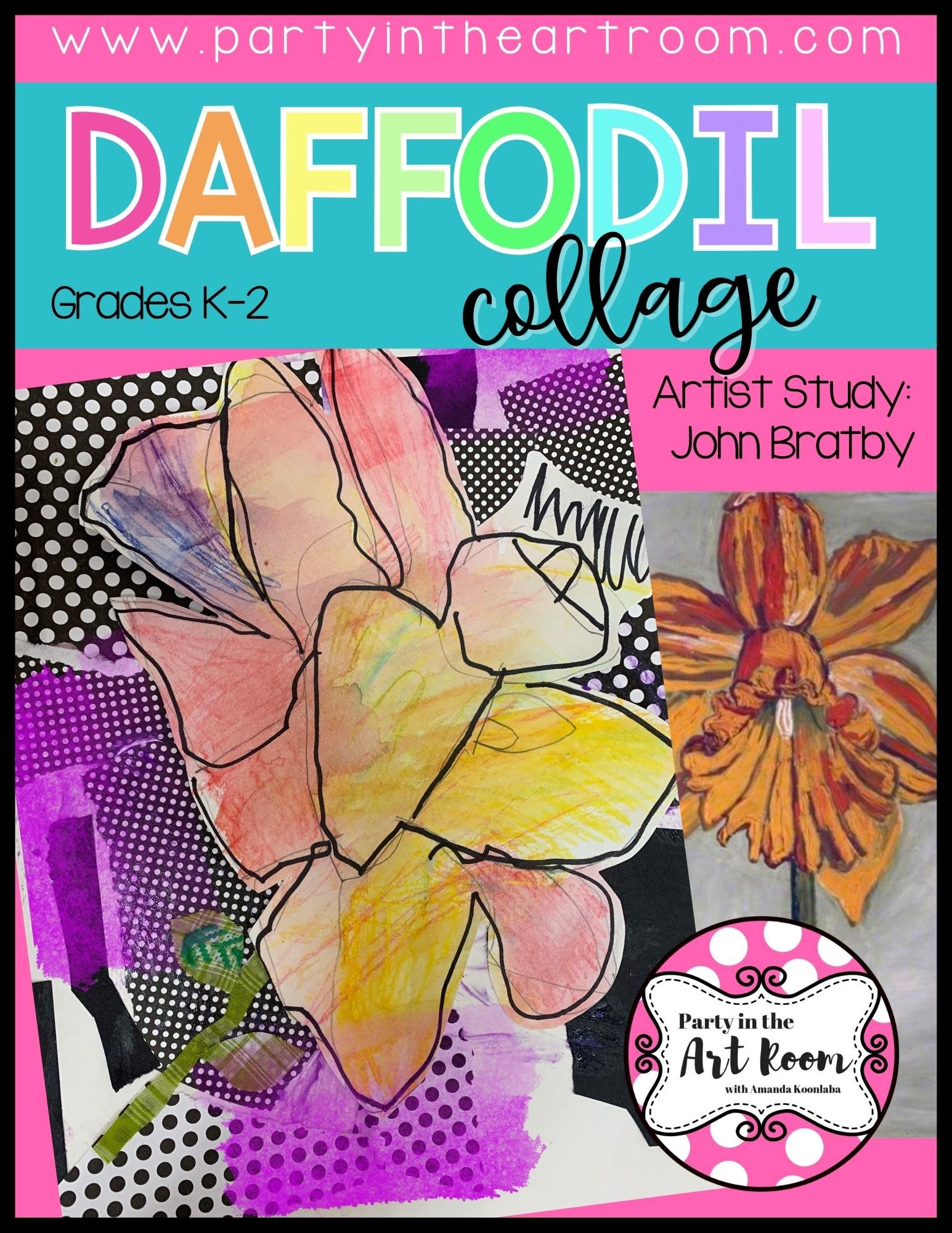
I want all students to feel successful in the art room, so I created a standards-based Daffodil Collage lesson to do just that! The lesson includes an artist study, student reflection, and more, so push your artists to their full potential.


Are you planning an abstract art lesson inspired by Paul Klee? Are your students going to create abstract portraits? Here’s an engaging and vibrant lesson to enhance your curriculum! This resource is an ideal addition to your elementary art plans, bringing creativity and excitement to your classroom.
Between 1927 and 1930, Edward Hopper painted two landscapes. These landscapes featured the Two Lights lighthouse in Cape Elizabeth, Maine. His play of sunlight and shadow across the buildings offered rich formal possibilities. For this art teacher, I saw the possibilities of offering my 5th grade art students a lesson they would remember.