Big Cats, Bold Color, and Chalk Pastel Sass: A High School Art Camp Win
What do you get when you mix chalk pastels, a fearless group of rising 9th graders, and a handful of moms who know how to organize a summer art experience? Apparently… glowing-eyed, open-mouthed, emotionally intense feline faces. I mean—just look at them!
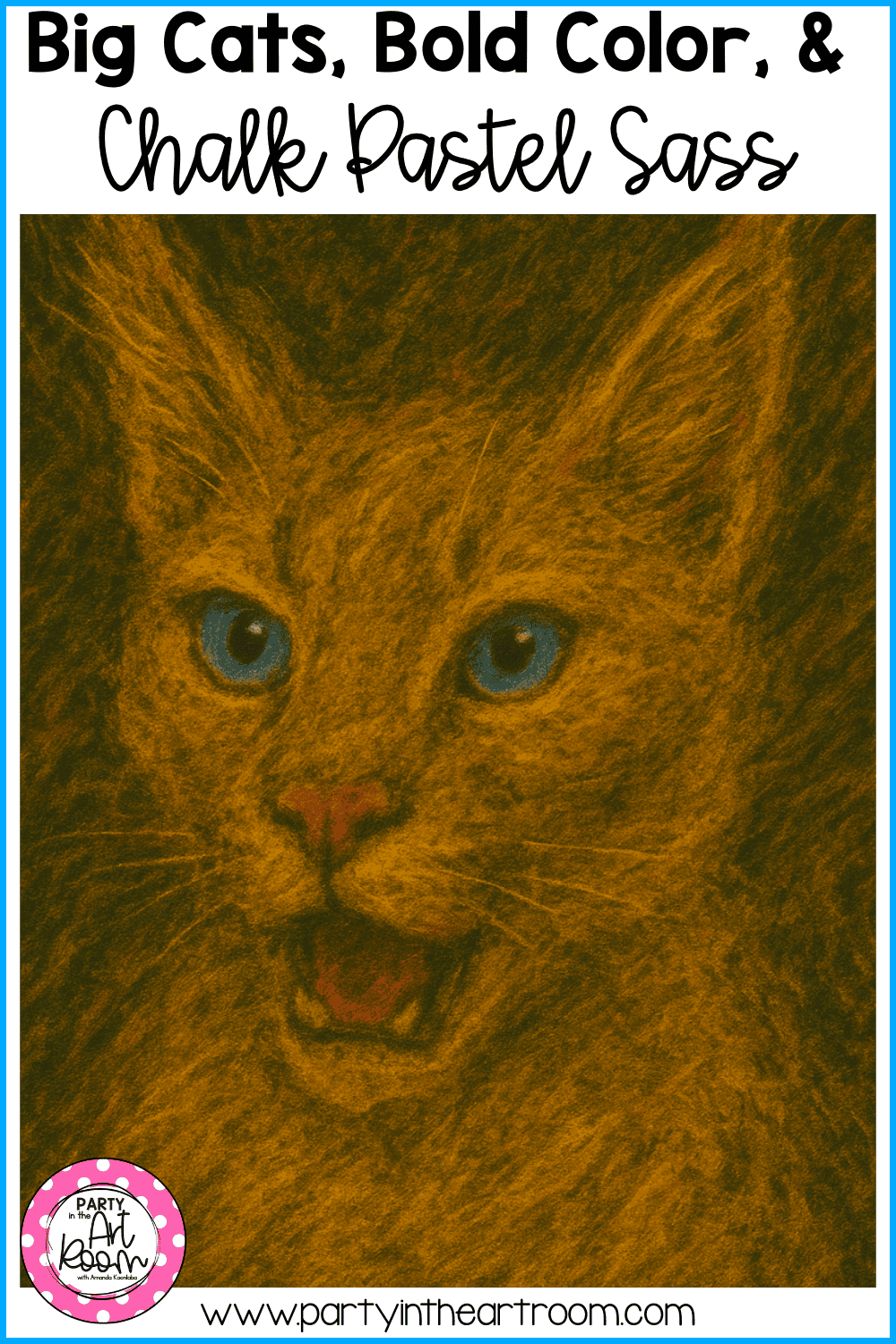
This glowing-eyed big cat captures the fearless color choices and emotional intensity students leaned into during our chalk pastel art camp.
This little art camp came together thanks to a group of art-loving teens (and their equally creative mamas) who wanted something a bit more serious than finger painting but still totally fun. So I said, “Sure, let’s go all-in on expressive animal portraits with chalk pastels.”
And they delivered.
The Project: Chalk Pastel Animal Portraits
Before the students even touched the good paper, we practiced. A lot. We played with blending techniques, explored warm vs. cool color combos, and tested how different types of pressure and layering could make the fur glow or the eyes pop. These kids weren’t just scribbling—they were building skills with intention.
When they were ready (and they made it clear they were ready), I handed out black paper, set out the chalk pastels, and let the big cat vibes roll. Each student chose a cat—some real, some imaginary—and got to work making their own vibrant, dramatic masterpiece.
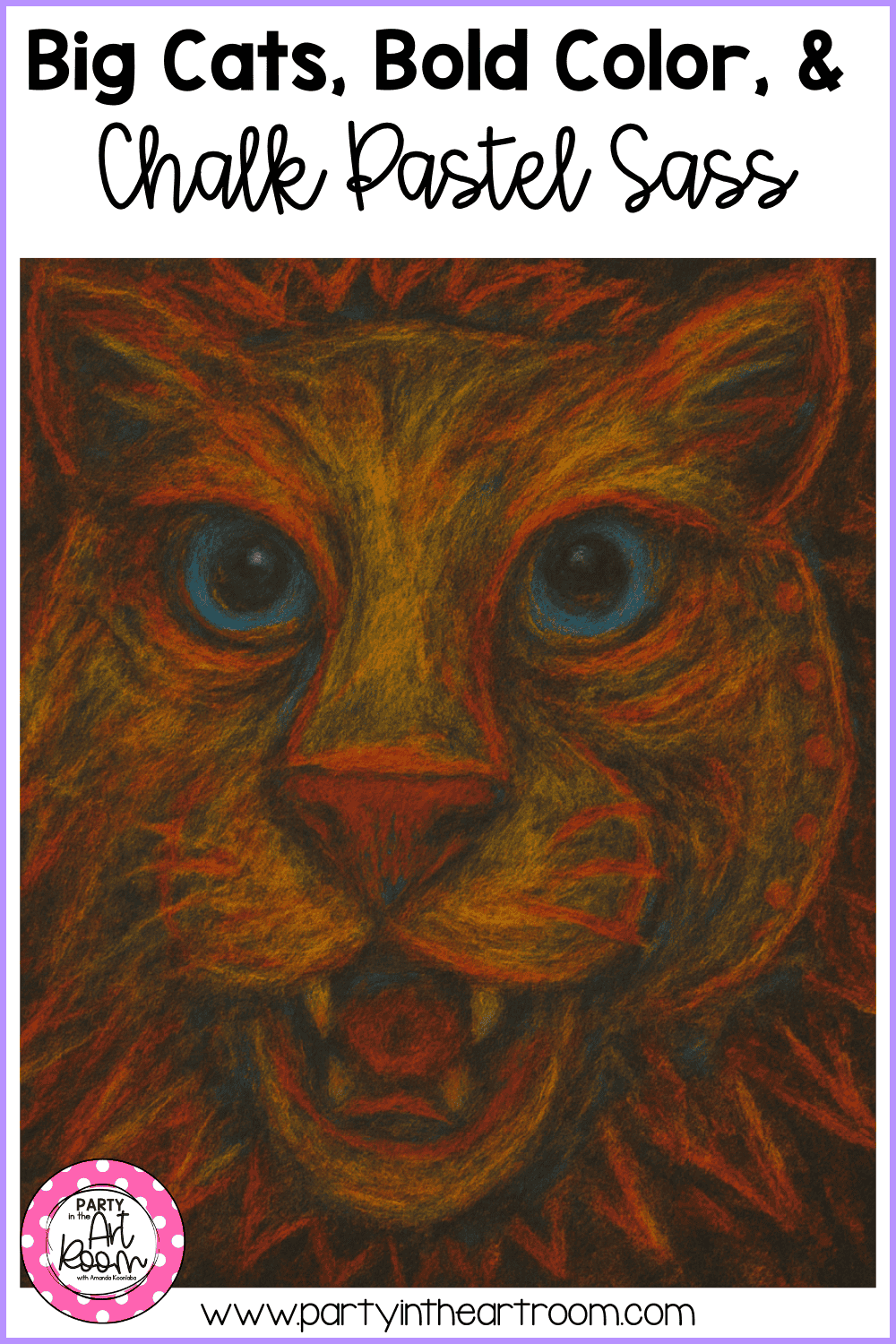
Bold outlines, dramatic color shifts, and confident layering helped students push past realism and let personality take over.
Materials We Used
● Chalk pastels (these from Amazon are vibrant and affordable)
● Black heavyweight drawing paper
● Kneaded erasers
● Blending stumps (or fingers... let’s be real)
● Hairspray or fixative spray (because pastels are dusty drama queens)
Optional but fabulous:
● Reference photos of leopards, lions, caracals, or your own grumpy housecat
Art Concepts We Snuck In (Like Ninjas)
This camp project gave us a playful way to sneak in some serious learning:
● Color theory (complementary colors and color intensity)
● Value (especially using highlights to create form)
● Texture (fur is no joke)
● Expression through line and shape (mouths open, eyes wide… you can feel these cats)
And because these were older students, we also talked about style and artistic choice. They got really into pushing color beyond realism and letting their cats have a bit of personality. (One looked like it could lead a punk rock band. I’m not mad about it.)
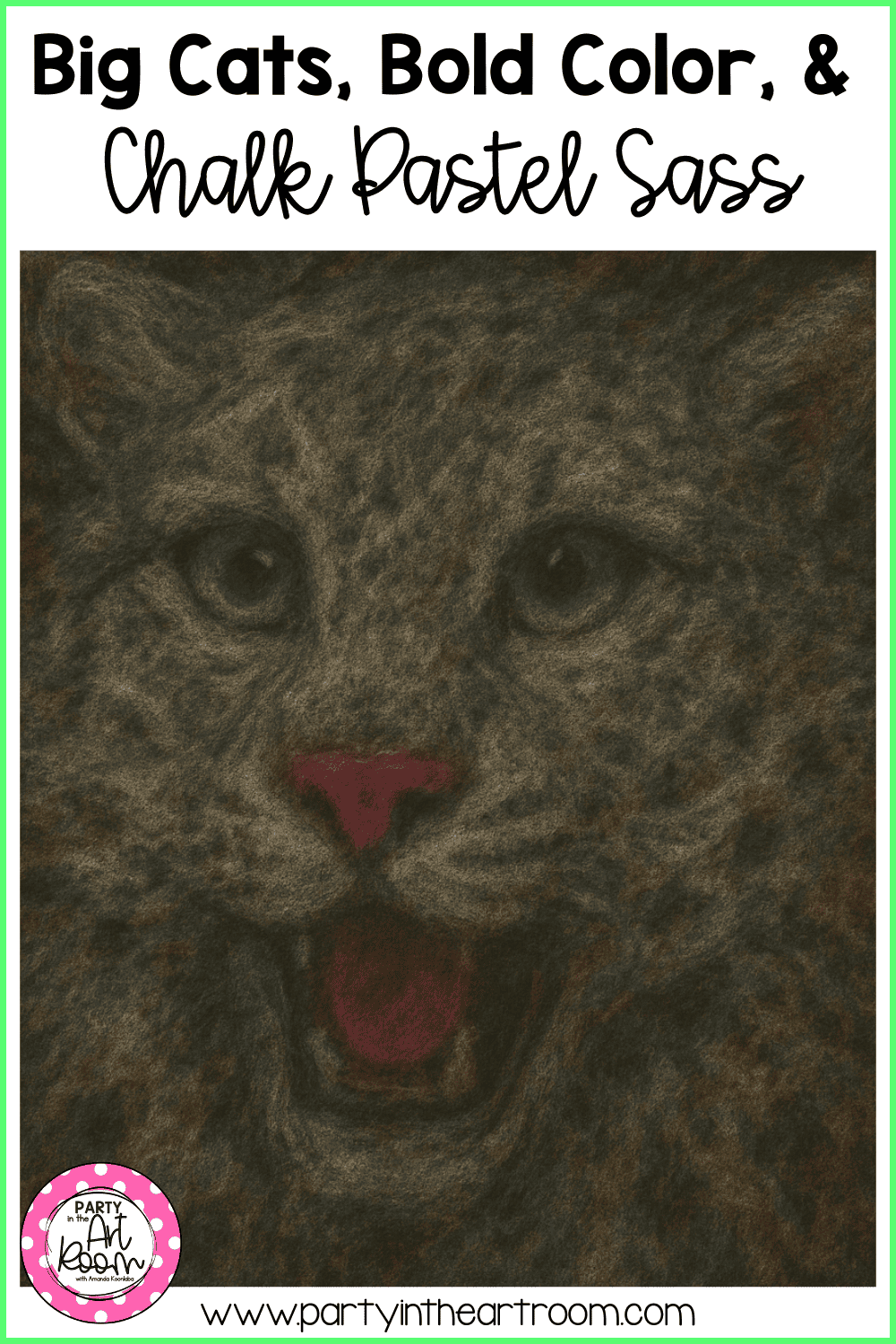
Studying fur texture and value turned these big cats into powerful lessons in observation and technique.
Adaptations for Other Settings
This project totally works in:
● Middle or high school art classes
● Homeschool co-ops with older kids
● A rainy day at grandma’s if you don’t mind pastel fingerprints
Want to try it with younger students? Just simplify by doing one layer of color at a time and maybe keep the portraits smaller. You can also check out this Wild Robot Art Lesson for a similar expressive animal vibe with a bit more structure for elementary artists.
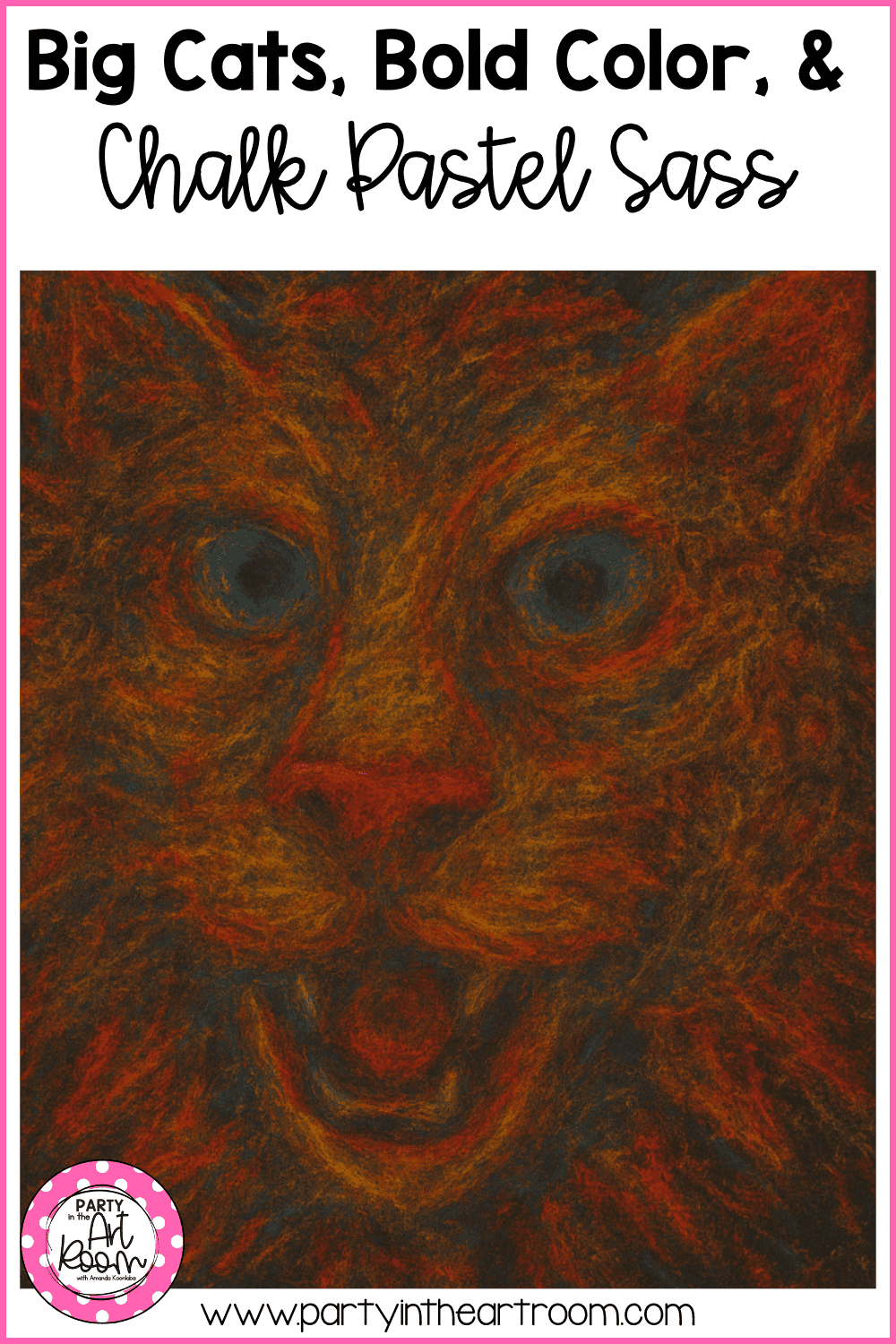
This finished pastel cat shows how the project scales beautifully for different ages while keeping the drama and energy intact.
Want to Try It? Here’s What I Recommend:
If you're thinking “Wait—I want to do this, too!” here’s a great starting point:
● Plaster Wrap Hacks Freebie: Even though it’s for 3D masks, it includes tips for building layered art lessons that totally apply here.
● Color Pop Drawing for Kids: This is a good warm-up lesson if you want to teach about color contrast before going full feline.
● More lessons and goodies here
Got big cat energy in your classroom or homeschool group? Let your students roar with creativity—and don’t forget to take pictures. You’ll want to remember these faces. 😻
More GREAT IDEAS:




Designed specifically for classroom use, these worksheets provide a template for your students to explore the concepts of tints and shades while developing their artistic skills. Whether you're looking for a way to enhance your art curriculum or just want to inject some creativity into your classroom, these worksheets are sure to inspire your students!

Check out discounts, deals, and recommendations on all our artsy faves!
Affiliate Disclosure: Party in the Art Room is supported by its audience. When you purchase through links on this site, a commission may be earned.
Get to know Amanda Koonlaba!
Hi! I’m Amanda. Teaching children to be creative thinkers is my greatest joy. I’m here to help you bring that same joy to your classroom.

This guide is packed with 25 ideas for using art to teach math and ELA. It’s arts integration for the win!
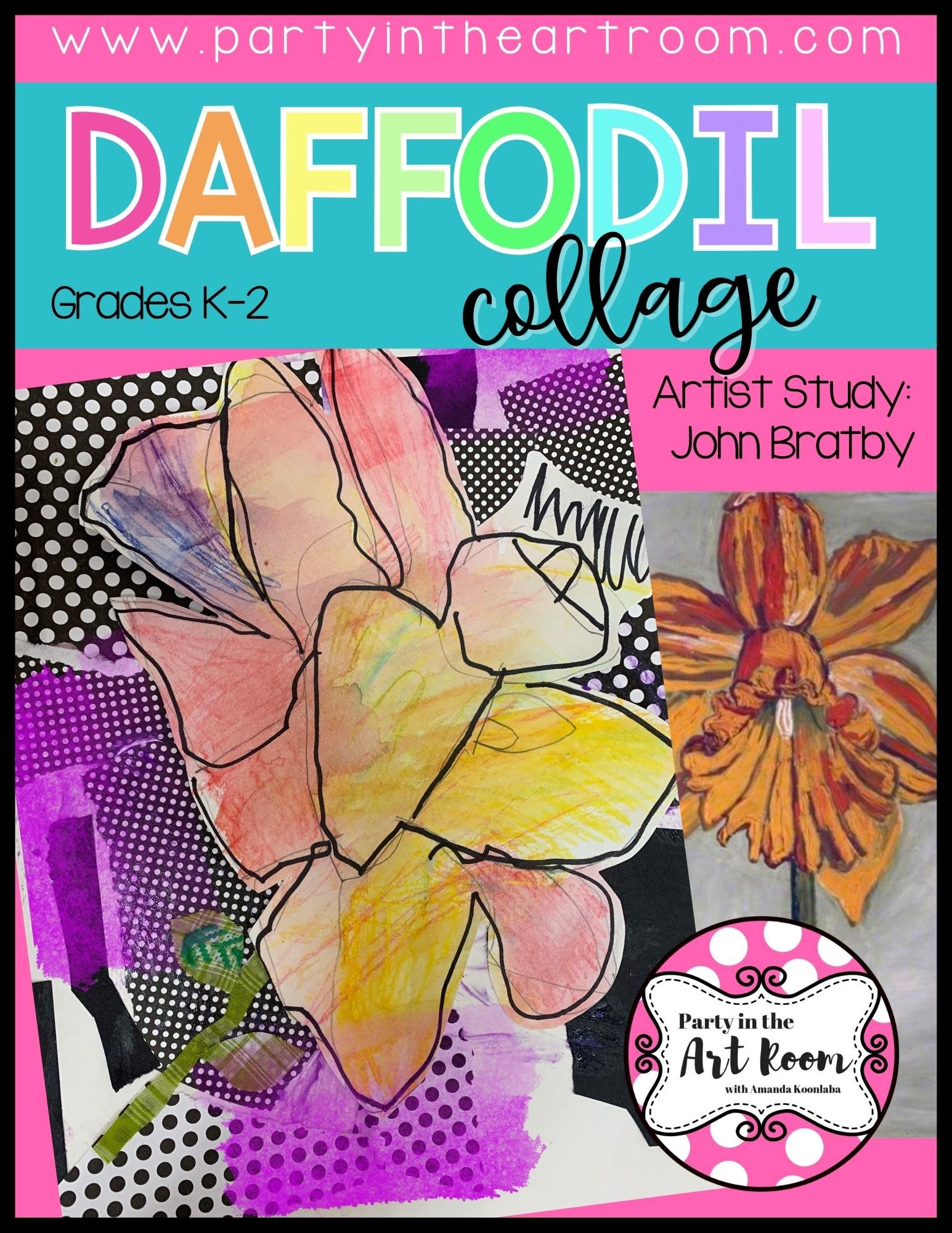
I want all students to feel successful in the art room, so I created a standards-based Daffodil Collage lesson to do just that! The lesson includes an artist study, student reflection, and more, so push your artists to their full potential.


Are you planning an abstract art lesson inspired by Paul Klee? Are your students going to create abstract portraits? Here’s an engaging and vibrant lesson to enhance your curriculum! This resource is an ideal addition to your elementary art plans, bringing creativity and excitement to your classroom.
Transform your classroom into a desert oasis with Party in the Art Room's engaging cactus watercolor lesson exploring warm and cool color relationships.
Students discover color theory through guided cactus drawings while developing watercolor techniques that bring their desert landscapes to life. This comprehensive desert cactus art lesson combines Master Works analysis with hands-on creation, building confidence through structured artistic exploration.
Warm and cool color study with watercolors
Guided drawing instructions included
Standards alignment and assessments provided
Master Works analysis for deeper learning
Student and teacher reflection sheets
Unlike simple cactus crafts, this desert cactus art lesson teaches line, shape, pattern, and texture while students create gallery-worthy desert artwork perfect for stunning hallway displays.
Add to Cart for vibrant desert creativity.