Two Birds, One Branch… and a Whole Lotta Painted Paper
There’s just something magical about this project. Two birds. One branch. And an explosion of color that takes your art room from “Tuesday afternoon” to “tropical rainforest realness” in no time flat.
This bird collage lesson has become a springtime favorite around here. It combines everything I love: painted paper, layering, texture, storytelling… and that moment when the whole class collectively gasps because the art table looks like a jungle exploded (in the best possible way).
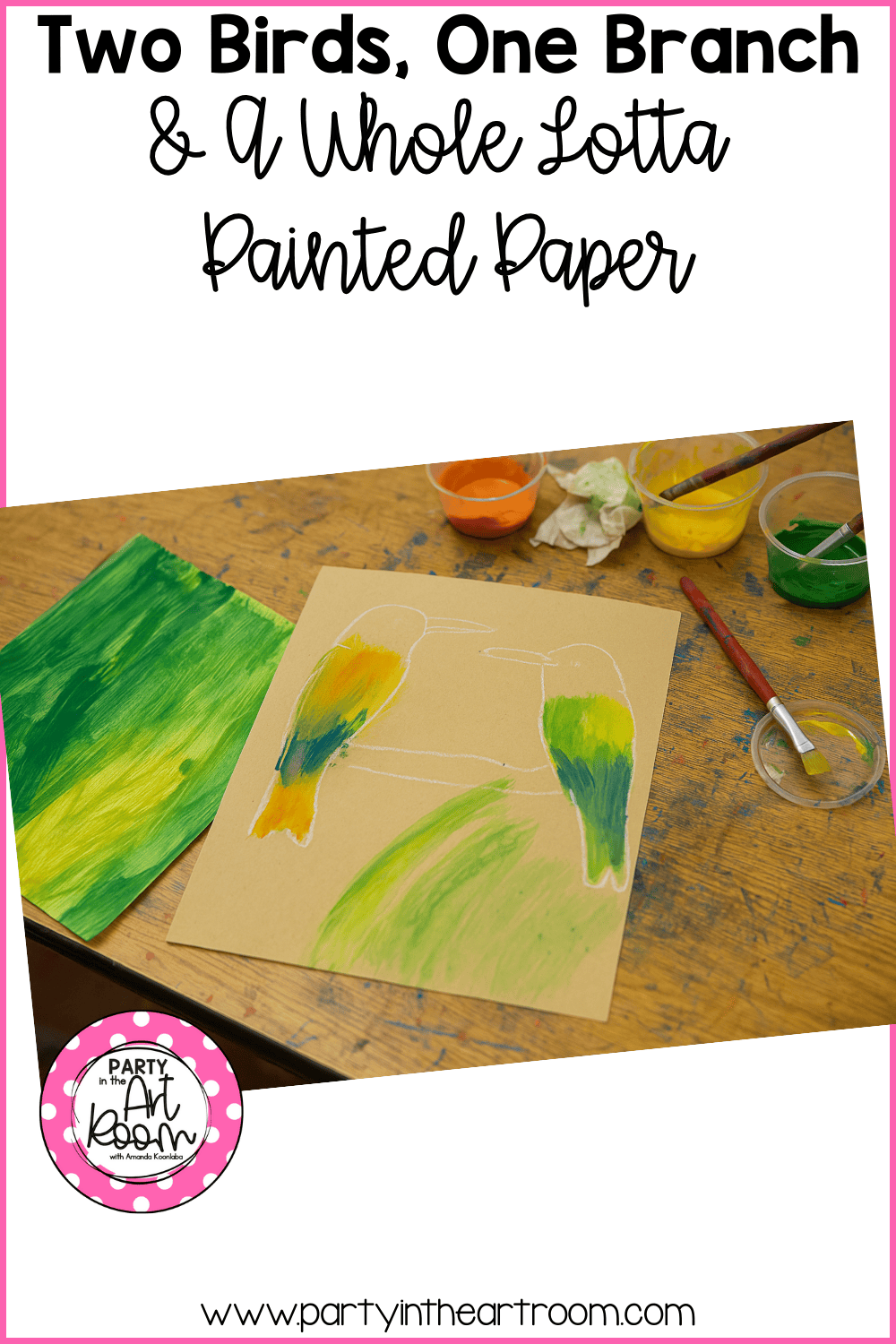
This project starts with two birds and one branch — but quickly turns into a classroom full of color, texture, and storytelling.
Painted Paper Party Time
We kicked things off by painting our own paper—no store-bought patterns or pre-made construction sheets allowed! I gave students access to all the juicy brights: turquoise, lime green, fiery orange, sunshine yellow. The goal? Make textures that felt like feathers, leaves, or wild jungle energy.
Then we let those babies dry.
(And yes, we used that time to talk about tropical birds and their habitats. #sneakycrosscurricularmoment)
Sketch, Snip, Stick
Once the paper dried, students sketched two birds on a branch, facing each other like they were mid-conversation about worm prices or migratory gossip. We used white chalk pencils to draw, which popped beautifully on darker backgrounds.
Then came the scissors and glue—and my personal favorite step: layering all those painted paper bits to build our birds and their leafy environments.
We talked about:
● Overlap for depth
● Contrast to make those birds pop
● And placement to balance the page (because symmetry is great, but quirky asymmetry? Chef’s kiss.)
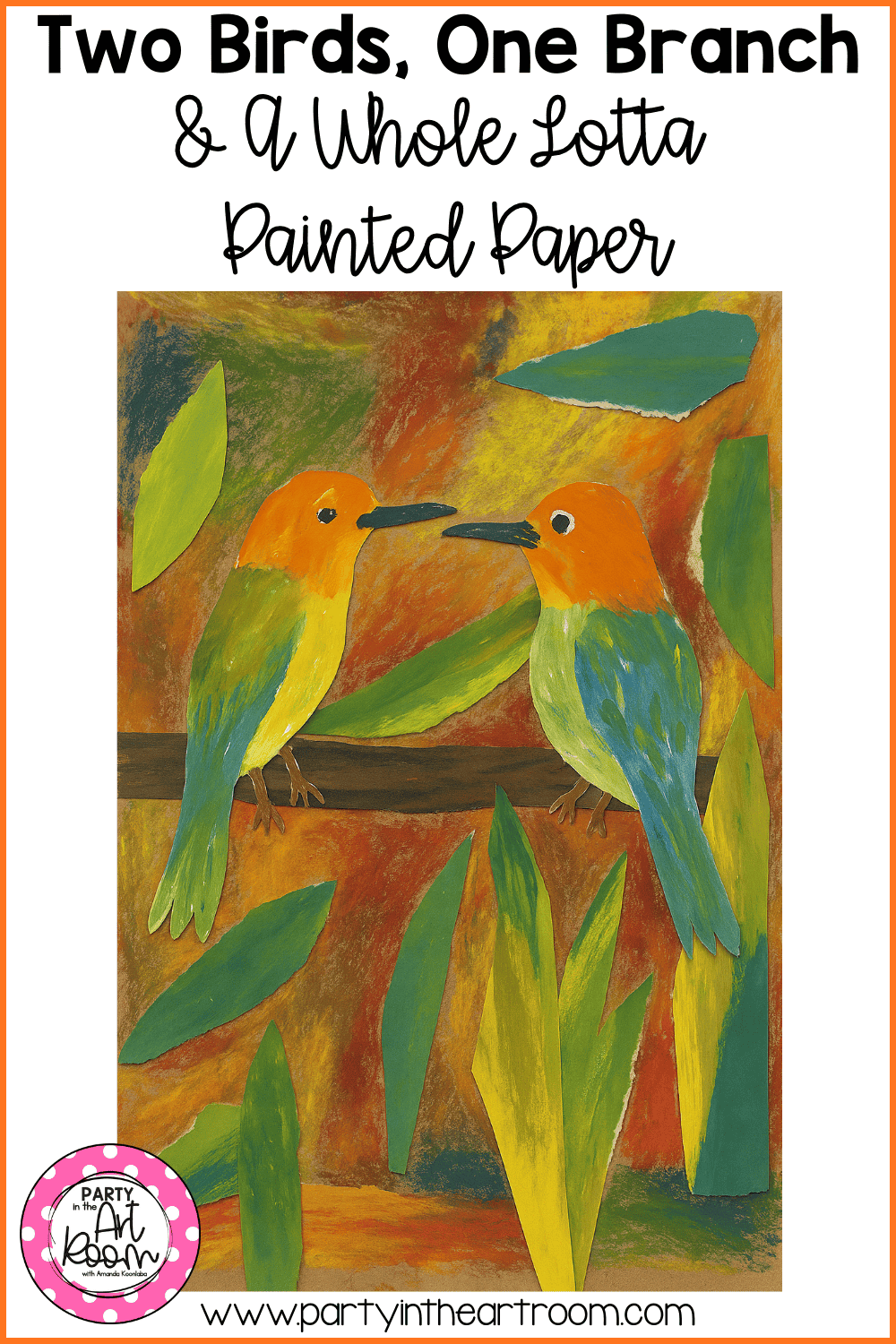
Once painted paper turns into feathers and leaves, the collage really starts to feel alive.
Art Concepts on the Fly
Beyond the color joyride, this lesson hits a few major art standards:
● Texture (hello, painted paper!)
● Line and shape (all those wing and leaf details)
● Composition (yes, we talk about balance like we’re in a fancy art museum)
And because kids LOVE to make up stories, we ended the lesson with a little reflection: “What are your birds talking about?” The answers ranged from “flying to Brazil” to “starting a worm bakery.” Truly iconic.
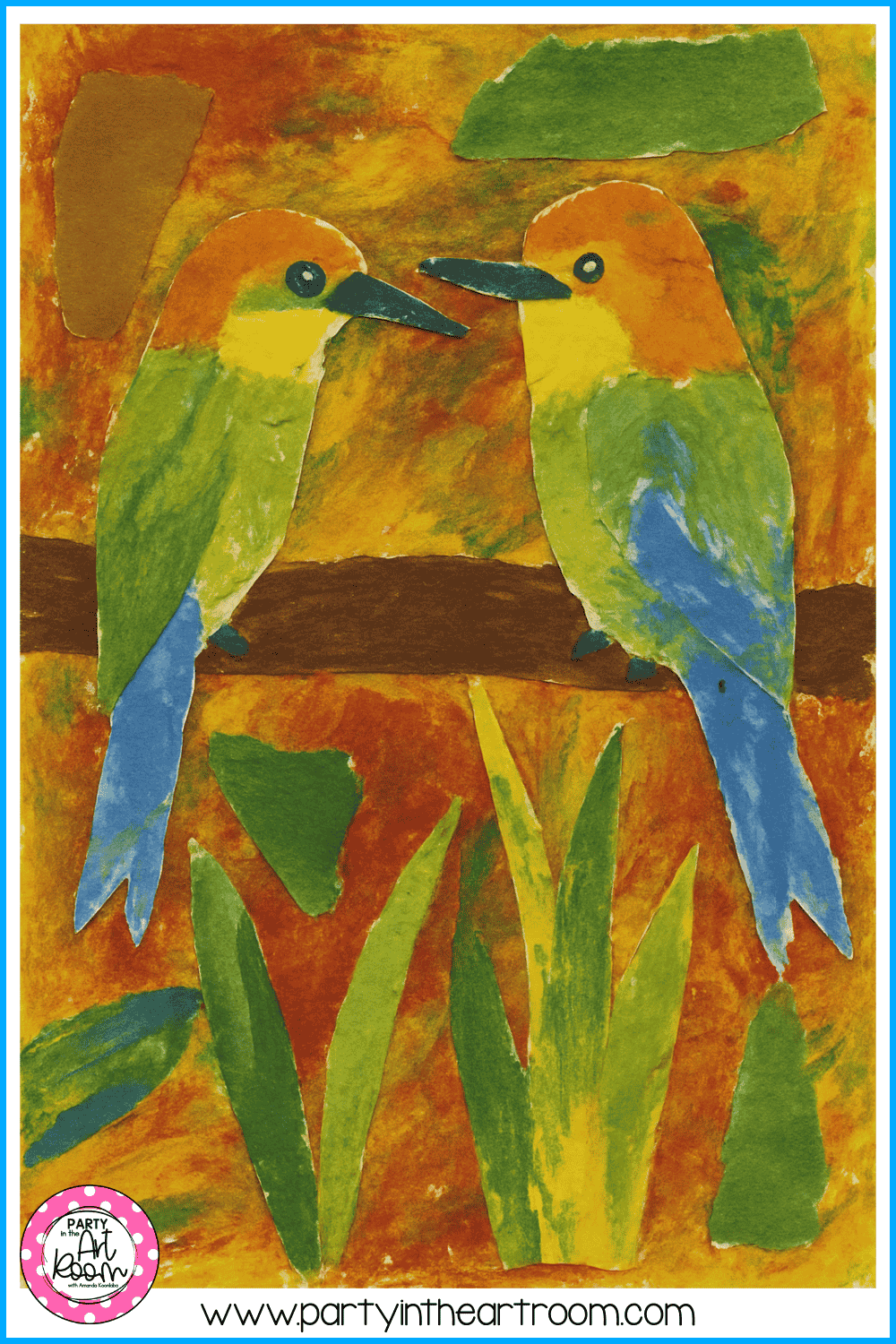
Layering color and shape helps students explore texture, contrast, and personality all at once.
For Homeschoolers & Centers
Wanna do this at home or in a center? No problem.
● Pre-paint papers and let kids just dive into cutting and assembling.
● Or use a bird shape template to keep things simple for littles.
● Bonus idea: pair it with a read-aloud about rainforest birds or a nonfiction book on habitats!
What You’ll Need:
● Drawing paper or craft paper background
● Tempera or acrylic paint
● Brushes + water cups
● Scissors and glue sticks
● White chalk or pastel pencils
● Bonus: bird facts and silly stories
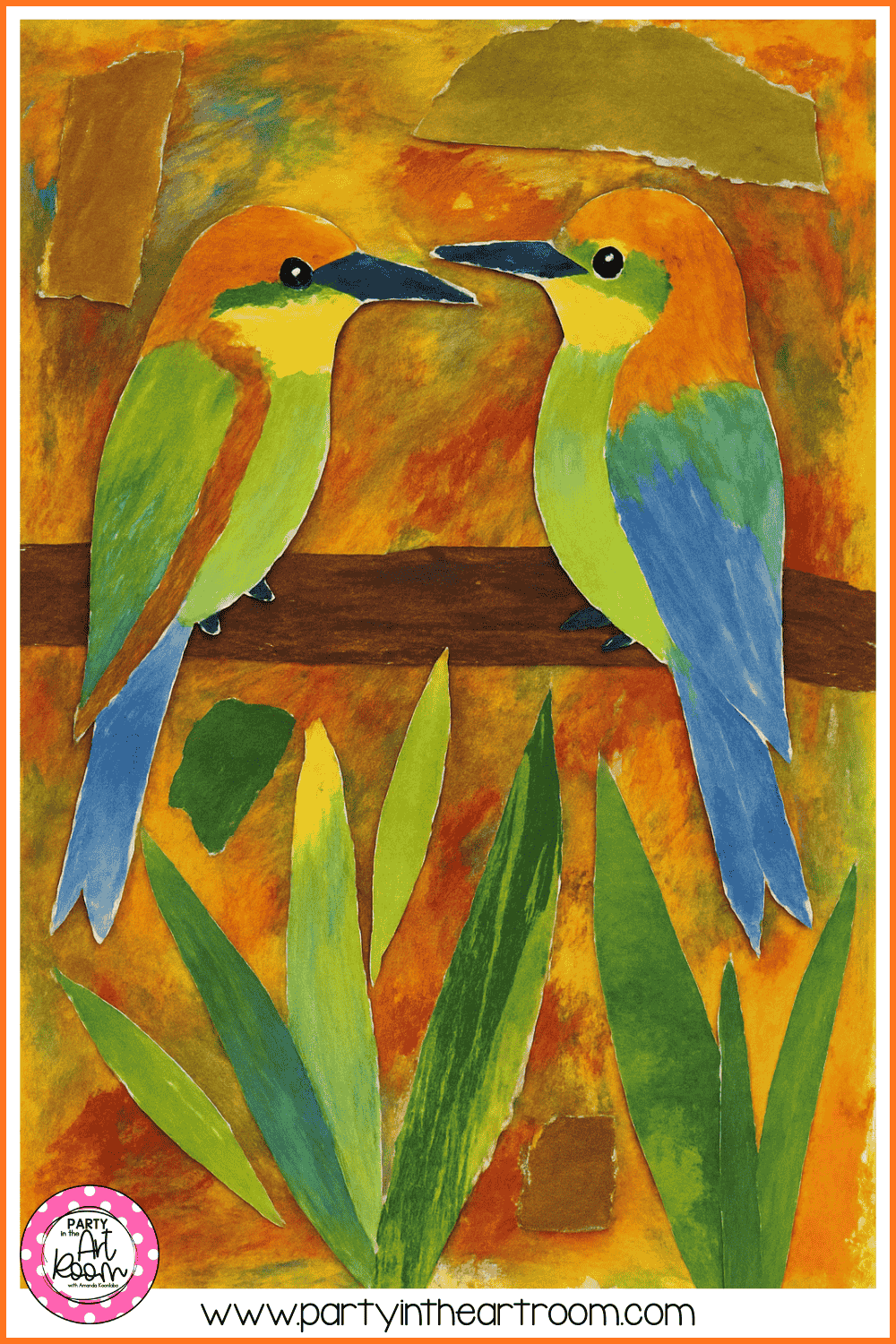
The same lesson, the same materials — and completely different results every single time.
Want to Keep the Creativity Going?
If this project made your heart flutter like a parrot in a mango tree, I’ve got two more that are perfect to pair with it:
🌼 Mono-printing Flowers Art Lesson — A printmaking twist using flowers and ink for even more layered fun. Great for spring or Mother’s Day!
🦁 Rousseau Animals Art Lesson — Inspired by jungle scenes and wild beasts, it’s a natural next step if your students loved the bird vibe.
Final Thoughts
I always say this: painted paper is classroom magic. It evens the playing field for students, makes every collage feel fancy, and lets creativity shine without fear of “messing up.”
And when two birds can tell a story with nothing but color and scissors? You know your art lesson is flying high.
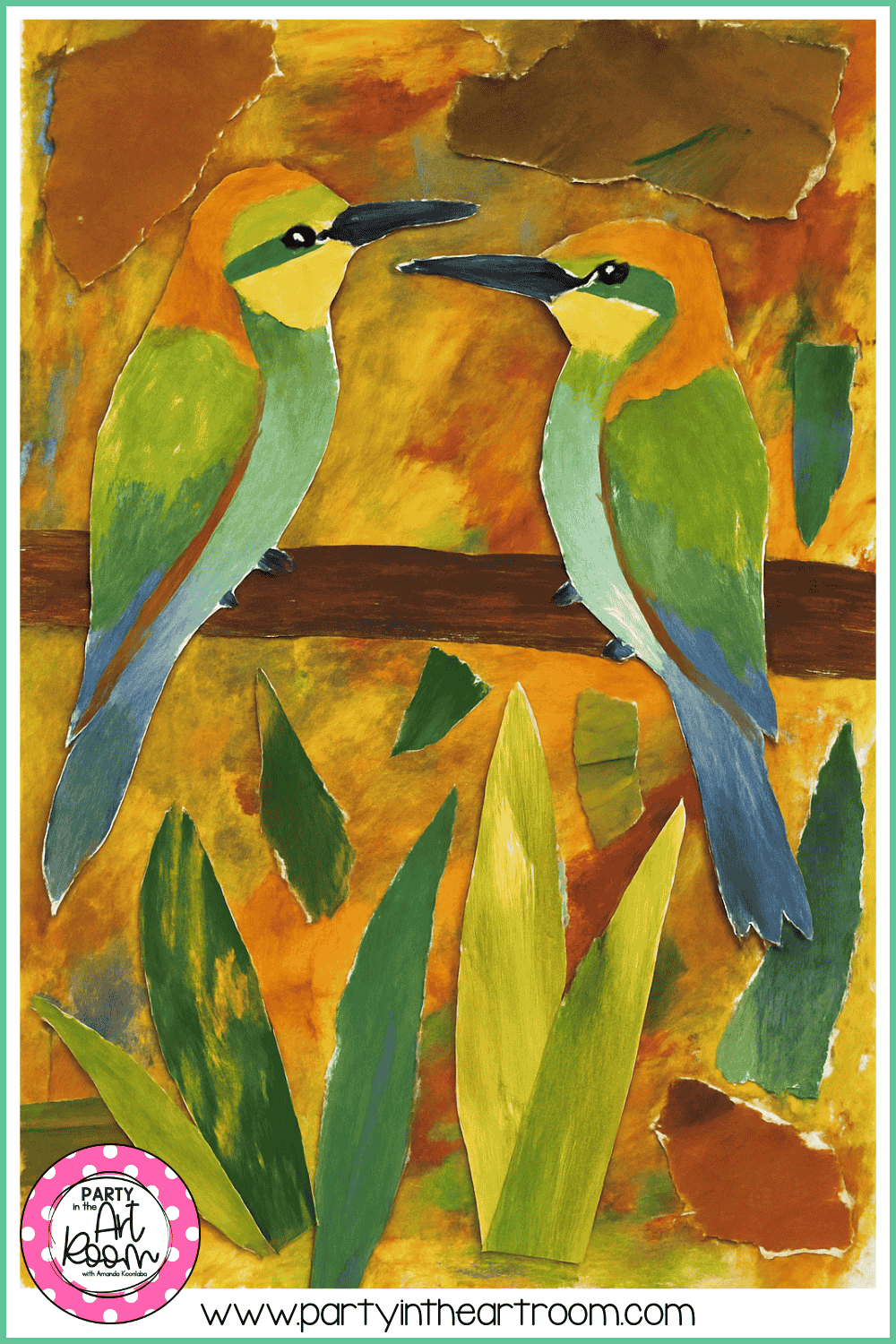
Painted paper collage grows with students, allowing complexity and confidence to build naturally.
You Might Also Be Interested In:



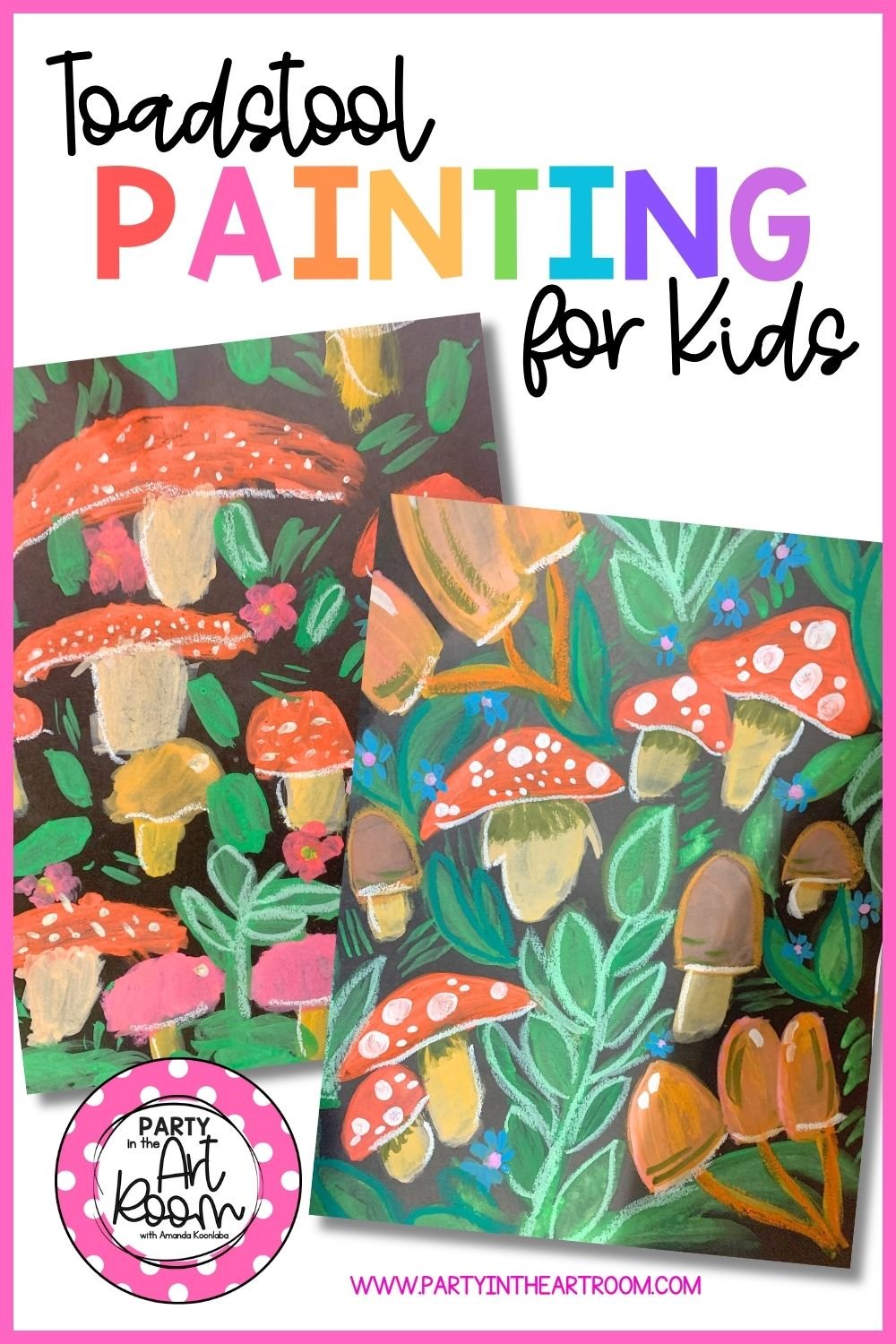

Perfect for anyone who thrives on hands-on, visually engaging activities, the Social Emotional Skills with Vincent Van Gogh pack brings art and emotion together to support holistic growth. Ready to make a meaningful impact on your homeschool journey?

Shop Workbooks on Amazon
Affiliate Disclosure: Party in the Art Room is supported by its audience. When you purchase through links on this site, a commission may be earned.
Get to know Amanda Koonlaba!
Hi! I’m Amanda. Teaching children to be creative thinkers is my greatest joy. I’m here to help you bring that same joy to your classroom.

This guide is packed with 25 ideas for using art to teach math and ELA. It’s arts integration for the win!
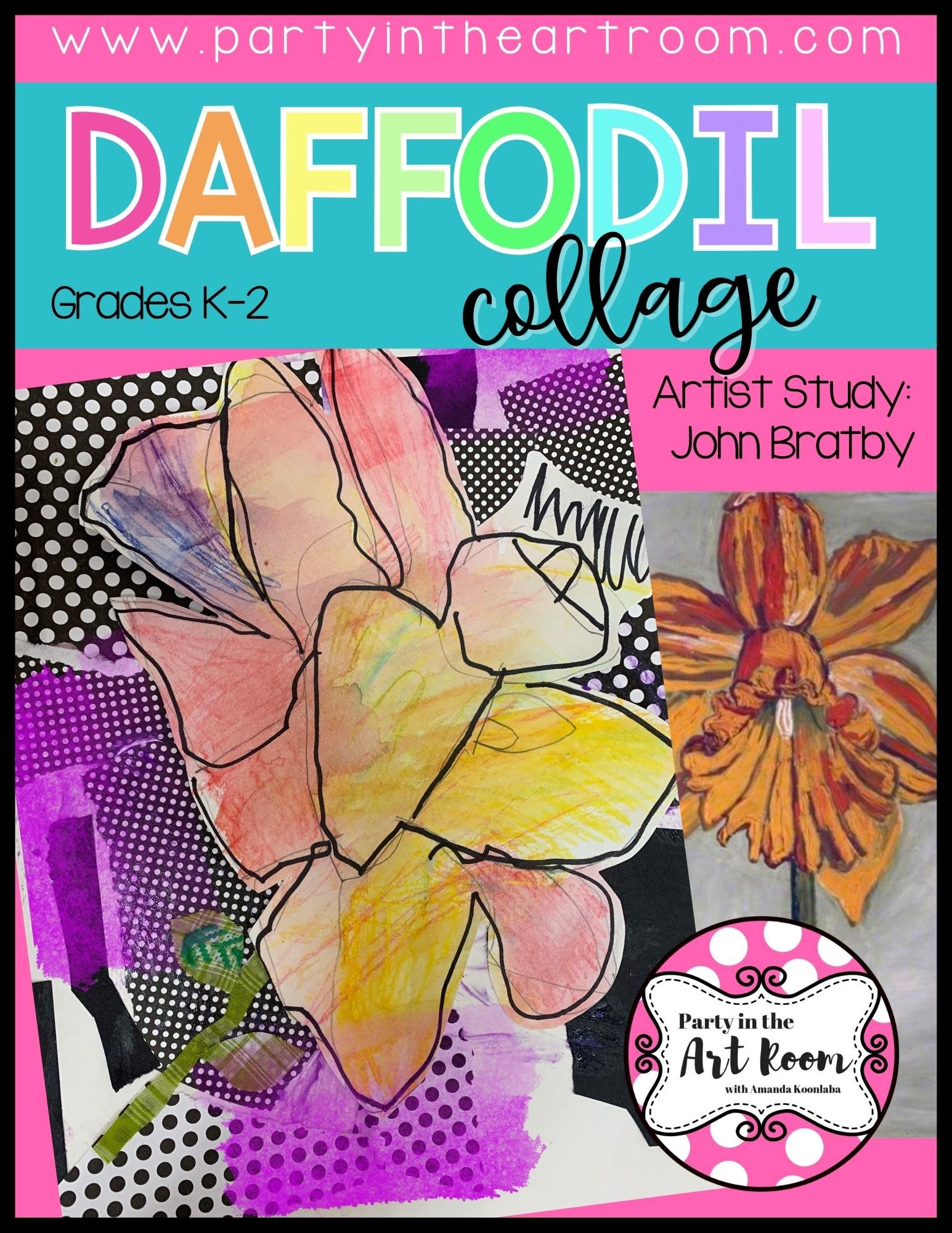
I want all students to feel successful in the art room, so I created a standards-based Daffodil Collage lesson to do just that! The lesson includes an artist study, student reflection, and more, so push your artists to their full potential.


Are you planning an abstract art lesson inspired by Paul Klee? Are your students going to create abstract portraits? Here’s an engaging and vibrant lesson to enhance your curriculum! This resource is an ideal addition to your elementary art plans, bringing creativity and excitement to your classroom.
Transform ordinary heart art into bold pop art masterpieces with Party in the Art Room's engaging pop art lesson that brings famous art movements to life.
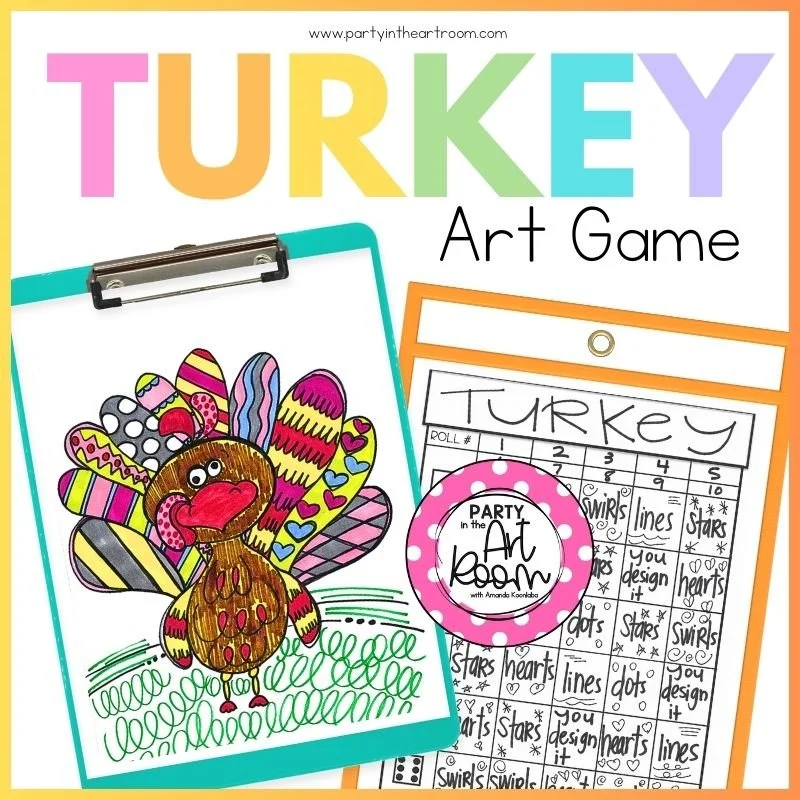
Students explore color, repetition, and contrast through art-and-roll games that turn artistic concepts into hands-on discovery. Clear step-by-step directions make this perfect for substitutes, while hand-drawn examples encourage creative risk-taking over perfection.