The Nutcracker Files: A Winter Art + Storytelling Project for Kids
Every December, I walk into my middle school art classes with high hopes and a hot cup of coffee… and I’m met with 27 versions of “Do we have to draw ornaments again?”
That’s when I knew it was time to shake things up. Enter: nutcrackers. Not just the kind that sit on a mantel looking judgmental—but bold, symmetrical, fully tricked-out characters with backstories, attitudes, and the potential for scandal.
This year’s nutcracker art project turned into a full-blown creative writing mystery that had my 6th and 7th graders all-in, even the “I hate drawing” kids. It was equal parts art, story, drama, and absolute middle school magic.
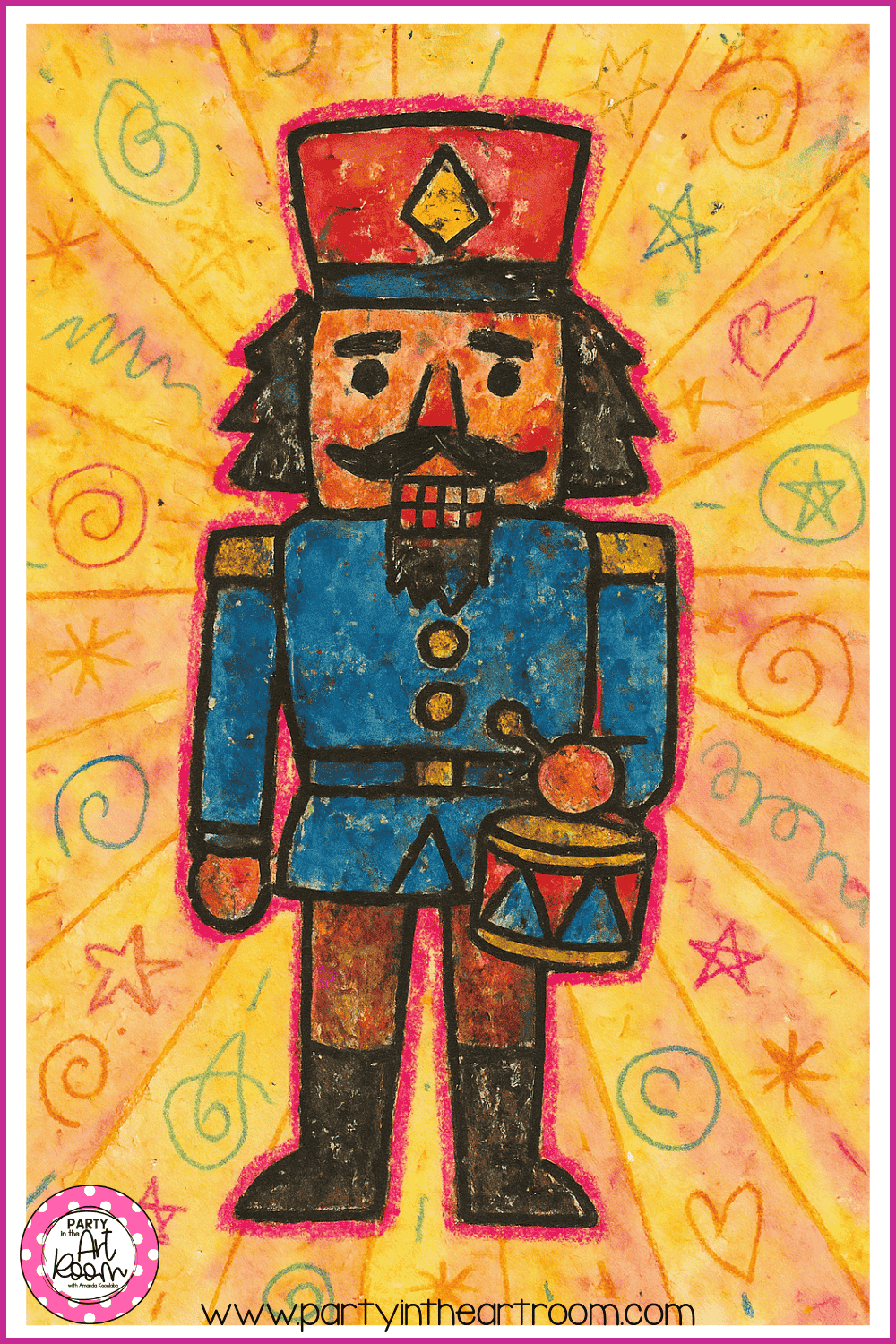
This nutcracker shows how symmetry sets the foundation while bold colors and confident design choices bring personality to life.
✨ Step 1: Drawing the Nutcracker Characters
We started with a simple template and talked about symmetry—how to keep the two sides of the body aligned, and how to add variation through details (buttons, hats, mustaches, whatever weird weapons they wanted to give their nutcracker).
Materials we used:
● White drawing paper
● Black Sharpies for bold outlines
● Crayola markers (or whatever your marker stash can handle)
● Optional sparkle: metallic gel pens or glitter glue
● Colored pencils or crayons for shading
Each student created their own character. Some looked traditional, some were rainbow warriors. One wore Crocs. (Because of course.)
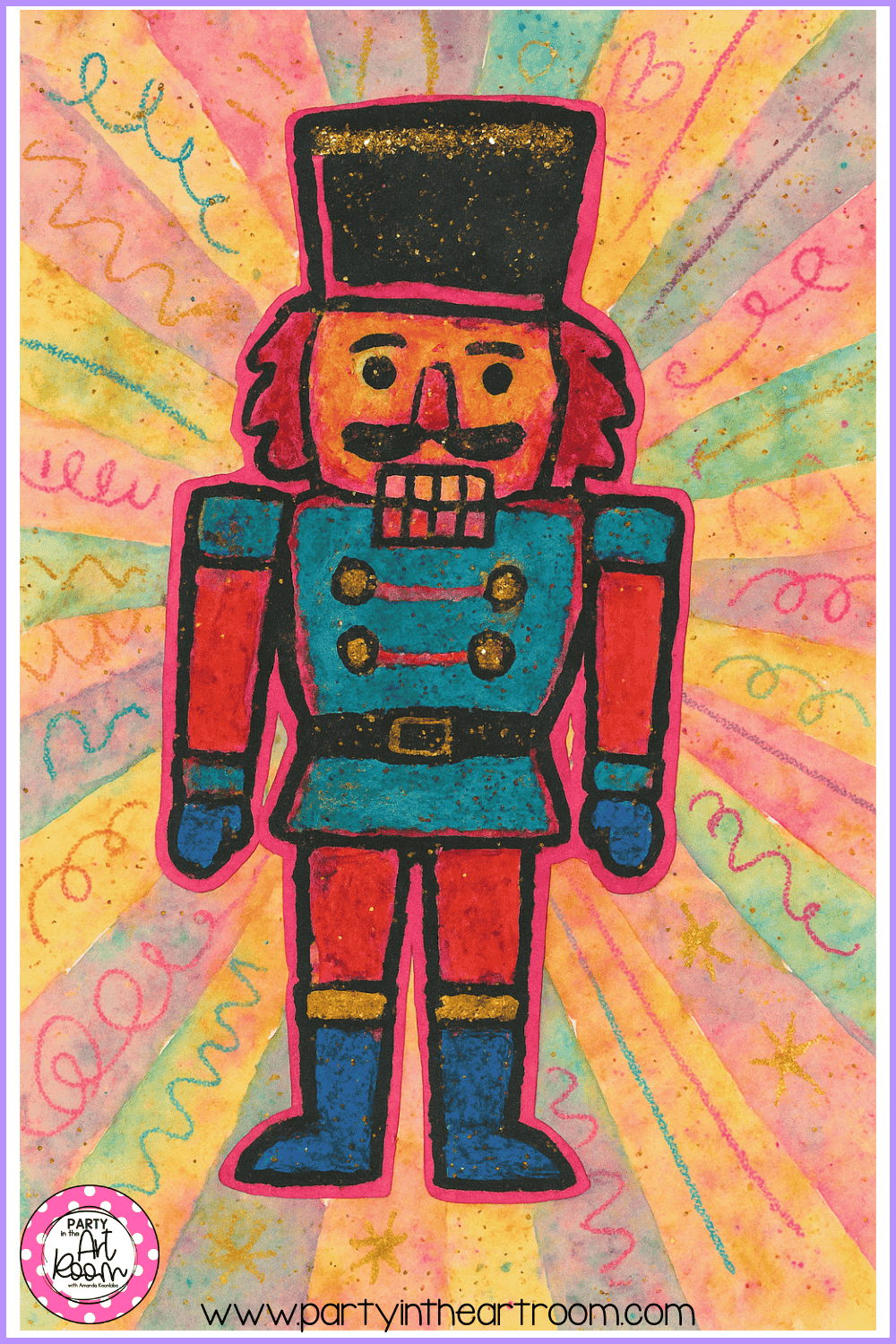
Simple symmetry paired with playful details helps students create characters that feel balanced but never boring.
📝 Step 2: The Writing Twist – The Nutcracker Files
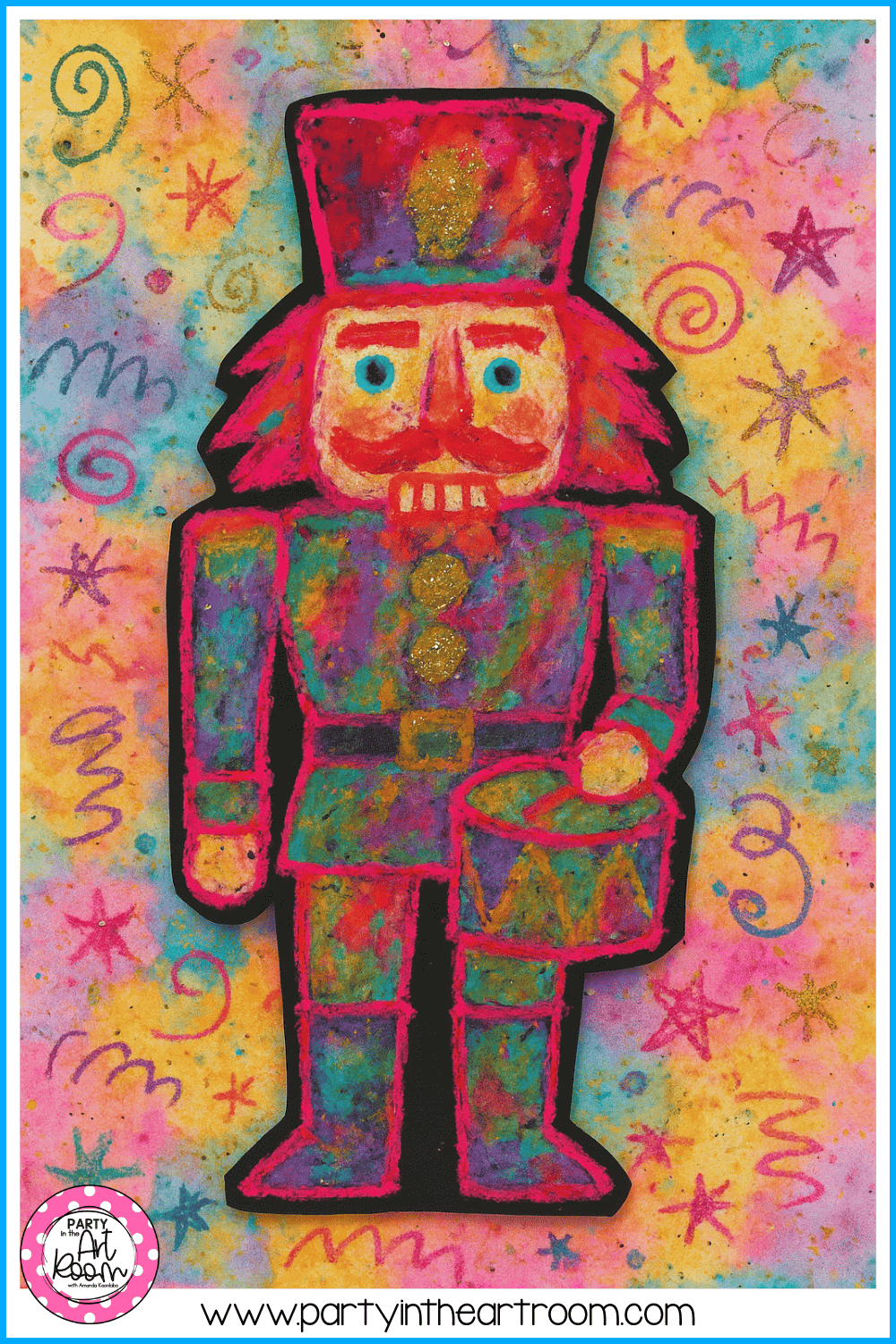
When students are given creative freedom, nutcracker designs become expressive characters instead of copy-and-paste drawings.
Once the art was done, I introduced the writing portion like this:
“You’ve created a nutcracker. But now imagine something’s gone missing at the Sugarplum Palace... and your nutcracker might be the culprit. Or the hero. Or maybe they’re just in the wrong place at the wrong time. Your job? Tell the story.”
This got big eyes from the whole class. Even the ones who’d already mentally checked out for winter break sat up.
Writing Choices:
To give students structure without boxing them in, I let them choose one of three writing styles:
Detective Mystery – Who stole the Crown of Candyland?
First-Person Diary – “I swear I didn’t mean to take the peppermint jewels…”
Suspect Report – A character profile with clues, alibis, and secrets
They had to:
● Include at least 3 characters (their nutcracker + 2 more)
● Drop 3 clues throughout their writing
● End with a solution—or leave us on a cliffhanger
🎯 Why This Worked (a.k.a. The Sneaky Learning Part)
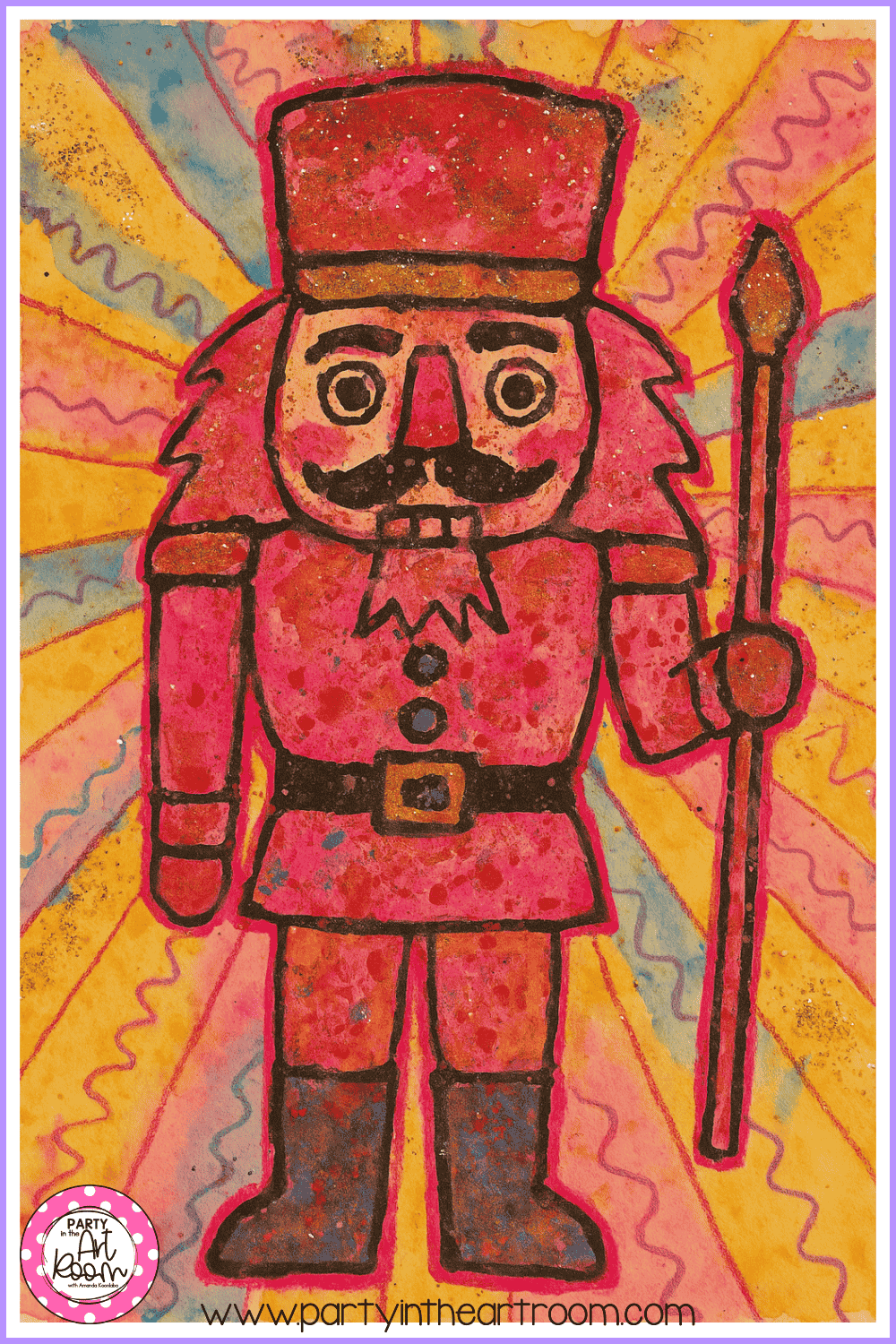
Strong visual storytelling makes it easier for students to imagine motives, secrets, and dramatic plot twists.
This wasn’t just holiday fun for fun’s sake (though it was fun). Students practiced:
● Narrative writing and structure
● Character development
● Visual storytelling through design
● Inference and logic with their clues
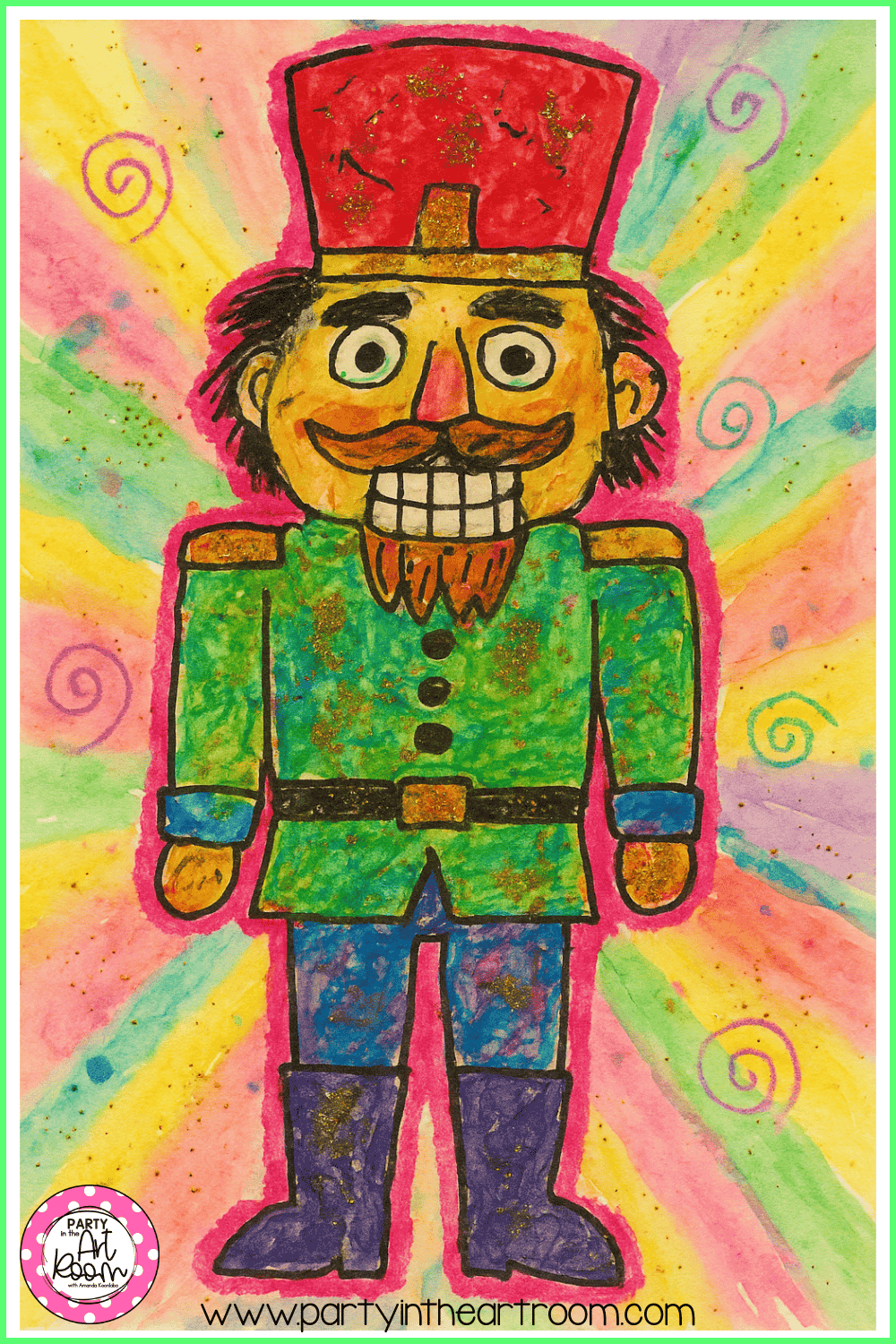
Detailed costumes and expressive backgrounds help students see their artwork as part of a larger story universe.
It also gave them ownership. They weren’t “just drawing” or “just writing”—they were building a whole universe, and the engagement was through the roof.
🧠 Classroom Tips for Keeping the Chaos Contained
● Plan enough time. We did this over 3 class periods—2 for art, 1 (or more) for writing and sharing.
● Let them partner up if they want to co-write a story featuring both of their nutcrackers. Collab = creativity + fewer behavior issues.
● Use folders or envelopes to store artwork and story drafts together. This avoids the dreaded “I left it in my locker” situation.
● Host a reading gallery. Kids taped up their artwork and laid out their stories for others to read (silent gallery walk style), or took turns reading aloud in dramatic voices. Middle schoolers love an audience, y’all.
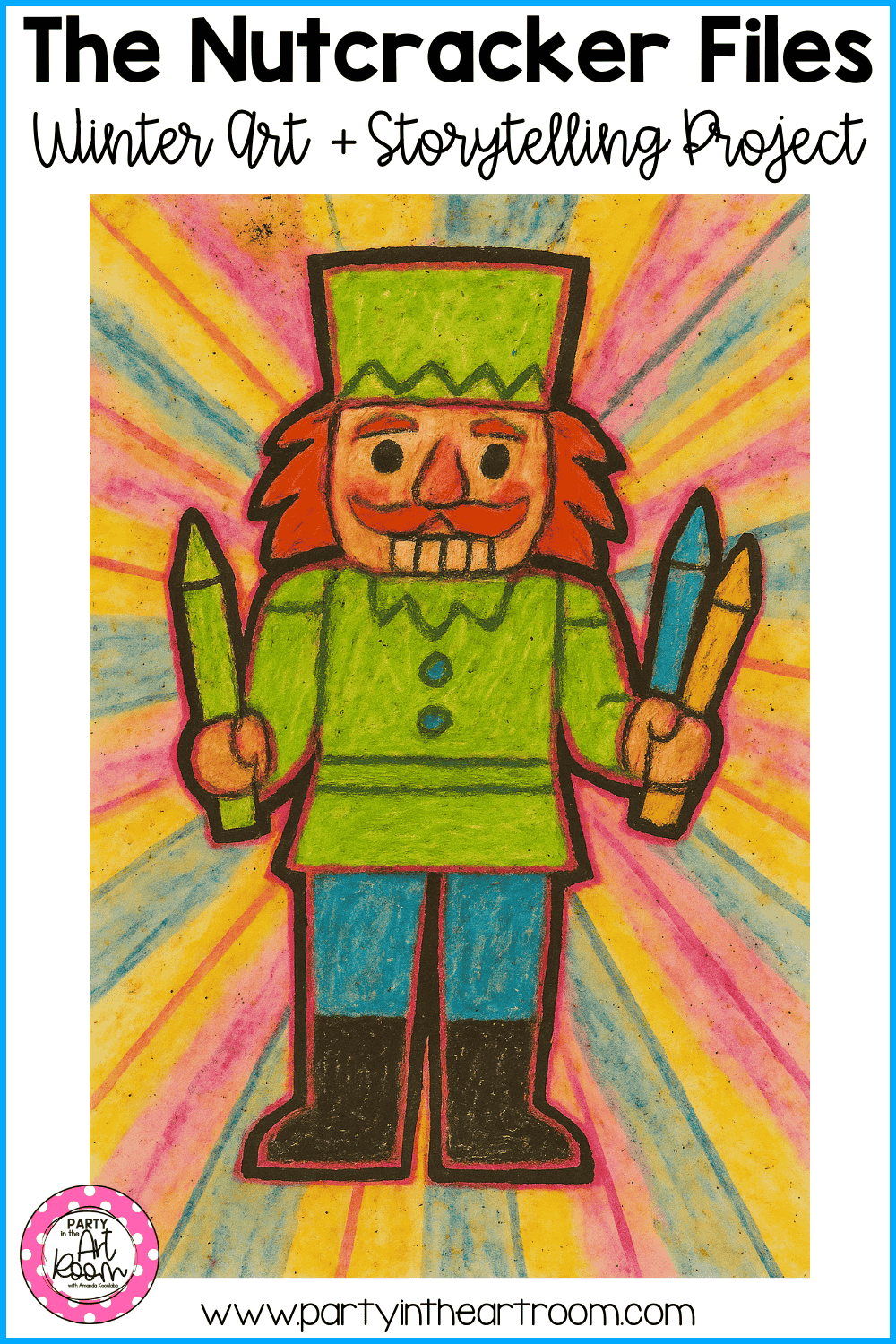
Adding props or objects encourages students to think deeper about their character’s role in the story.
🧵 Related Lessons That Pair Perfectly
● 🎅 How to Draw a Reindeer – Step-by-Step
Works great in a winter rotation or as a second character to feature in their stories. Plus, reindeer drama? Yes please.
● 🖊️ Peter Rabbit Monoprinting – Printmaking Meets Storytelling
Another character-driven art + writing lesson. This one uses printmaking and builds narrative skills, just like Nutcracker Files.
● 🎭 How to Make Really Easy Animal Masks with Plaster Wrap
3D character building + backstory writing = an excellent follow-up for students who loved the drama of nutcracker mysteries.
Want a Free Nutcracker Files Writing Planner?
If you're thinking, “Okay, this sounds amazing but I don’t have time to make clue trackers and story guides,”—I got you. I’ll be adding a FREE downloadable writing planner and character profile sheet to this post soon. Drop your email [here] to get it first!
This is the kind of project that sticks with kids. Not because it’s perfect, but because it lets them play—with art, with words, and with wild little ideas that turn into something really cool.
Let your students be weird. Let the nutcrackers wear sunglasses. Let the peppermint crown get stolen. And most of all? Let yourself enjoy the fun part of teaching right before winter break.
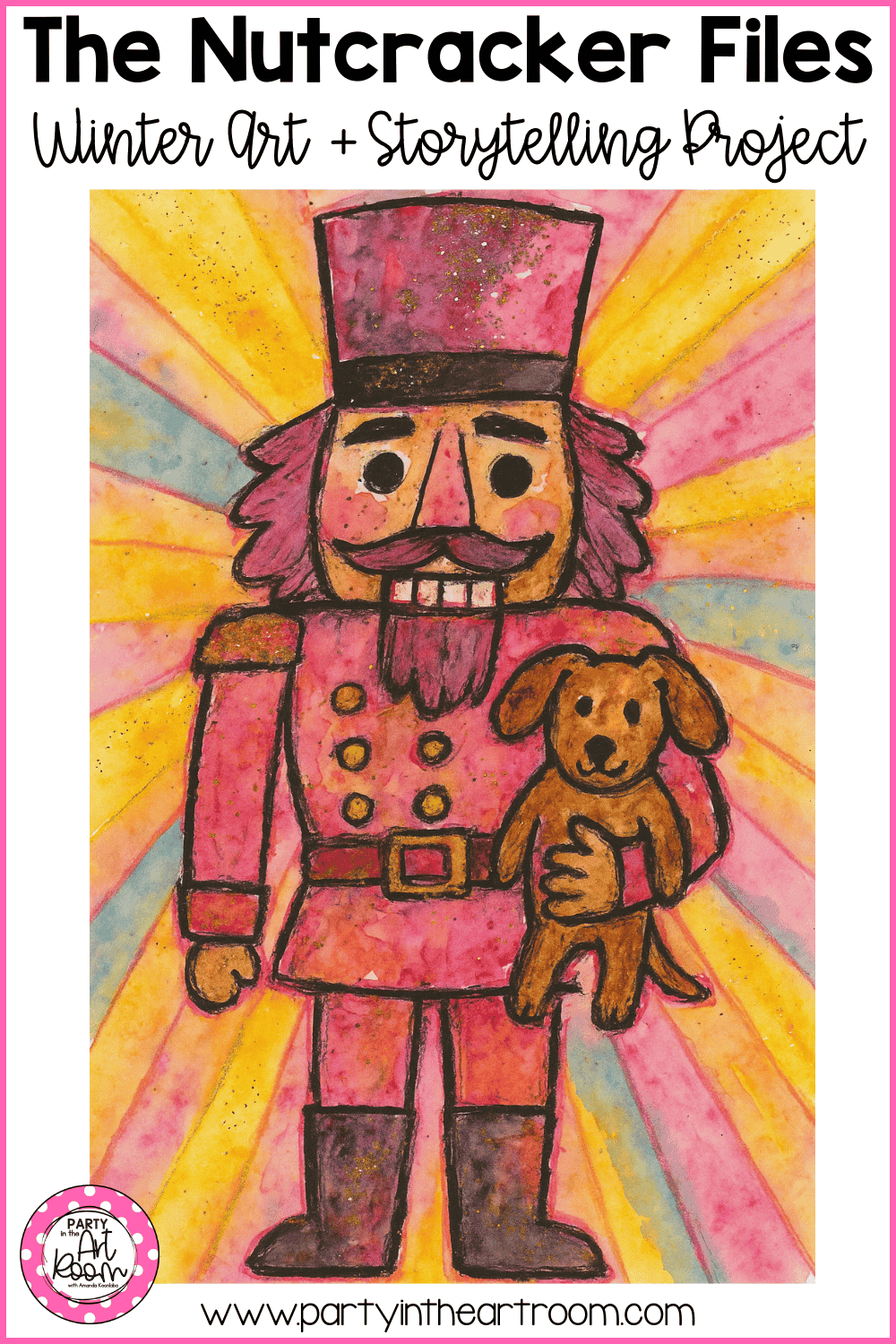
Characters with relationships and unexpected details spark stronger narratives and student investment.
You Might Also Be Interested In:




Perfect for anyone who thrives on hands-on, visually engaging activities, the Social Emotional Skills with Vincent Van Gogh pack brings art and emotion together to support holistic growth. Ready to make a meaningful impact on your homeschool journey?

Shop Workbooks on Amazon
Affiliate Disclosure: Party in the Art Room is supported by its audience. When you purchase through links on this site, a commission may be earned.
Get to know Amanda Koonlaba!
Hi! I’m Amanda. Teaching children to be creative thinkers is my greatest joy. I’m here to help you bring that same joy to your classroom.

This guide is packed with 25 ideas for using art to teach math and ELA. It’s arts integration for the win!
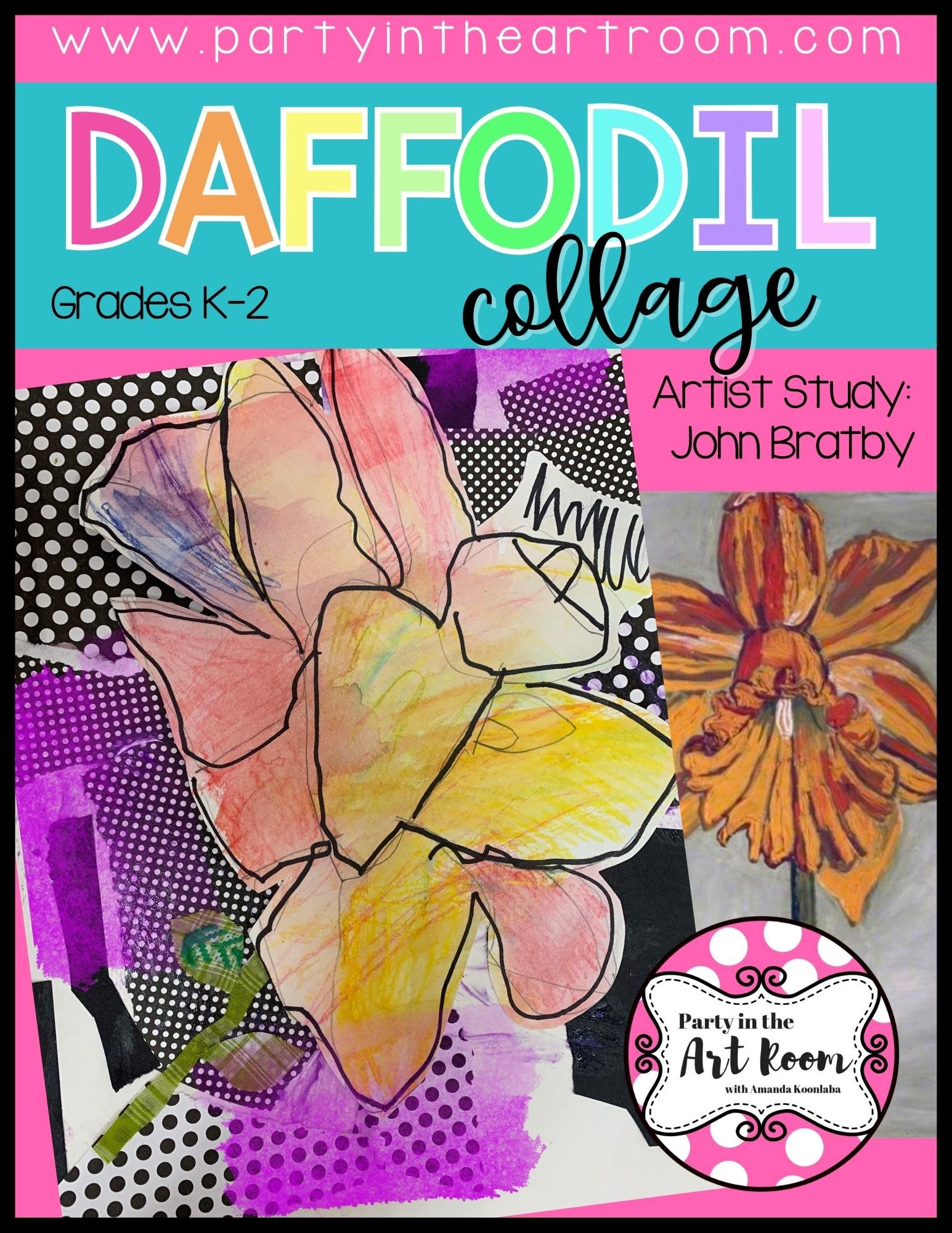
I want all students to feel successful in the art room, so I created a standards-based Daffodil Collage lesson to do just that! The lesson includes an artist study, student reflection, and more, so push your artists to their full potential.


Are you planning an abstract art lesson inspired by Paul Klee? Are your students going to create abstract portraits? Here’s an engaging and vibrant lesson to enhance your curriculum! This resource is an ideal addition to your elementary art plans, bringing creativity and excitement to your classroom.
Transform ordinary heart art into bold pop art masterpieces with Party in the Art Room's engaging pop art lesson that brings famous art movements to life.
Students explore color, repetition, and contrast through art-and-roll games that turn artistic concepts into hands-on discovery. Clear step-by-step directions make this perfect for substitutes, while hand-drawn examples encourage creative risk-taking over perfection.