A Fruit & Crayon Mish Mash That’ll Make Your Art Room Smile
There’s something magical about watching a bunch of 4th graders giggle while gluing googly eyes onto construction paper kiwis. I don’t know what it is about mish mash projects — maybe it’s the color chaos or the character personalities — but kids eat this kind of art up like it’s snack time.
This goofy-fun project was inspired by a piece of my own artwork where fruit and crayons come to life with cartoon eyes and a boatload of attitude. I showed my students the original piece (peep the watermelon with jazz hands and the cherry with opinions) and we were off to the races.
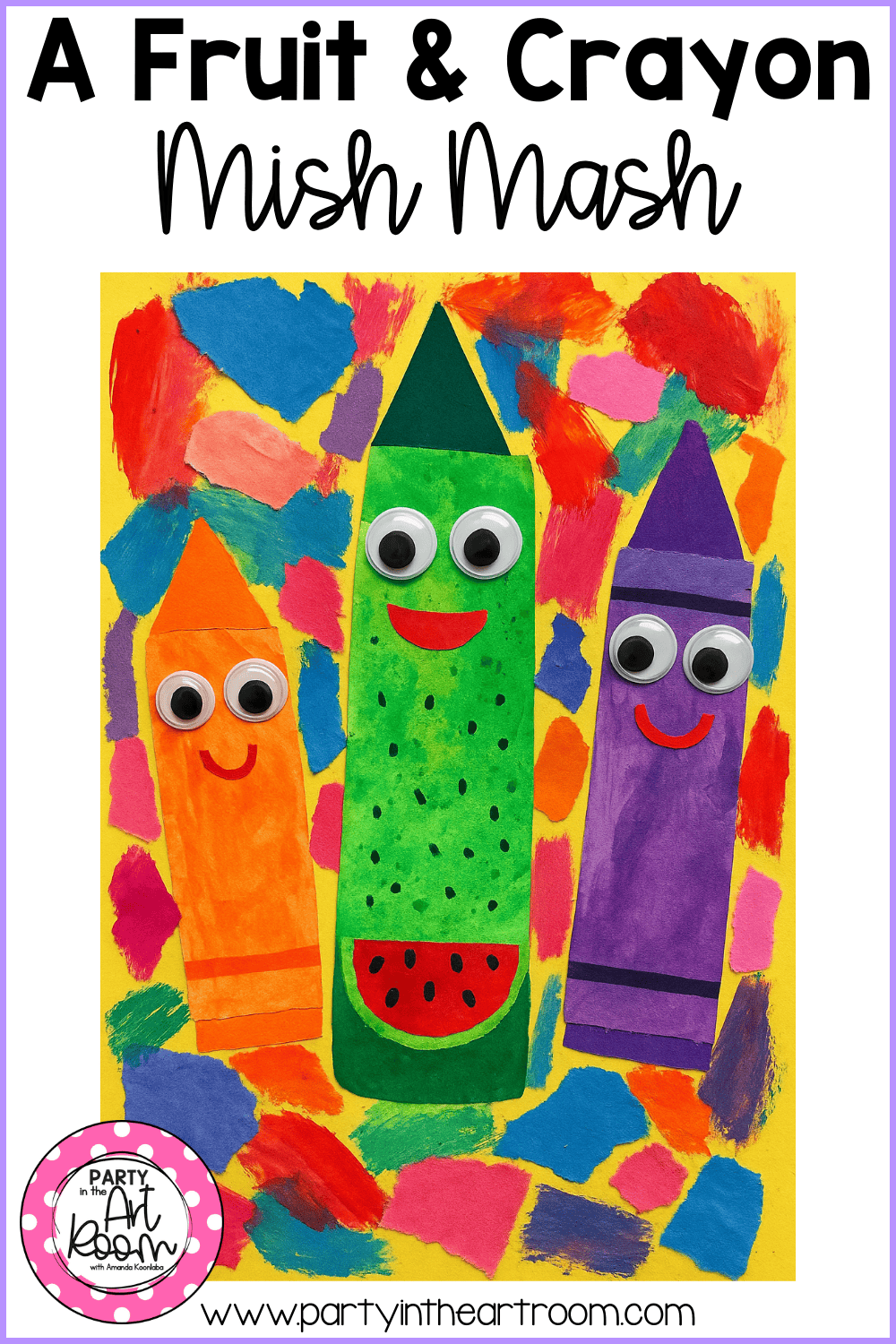
When simple shapes meet big personalities, even crayons and fruit turn into expressive characters kids can’t stop smiling about.
What We Did:
We started by talking about how simple shapes can turn into expressive characters. Then, students built crayon and fruit mashups using cut paper, paint, markers, and of course — the sacred art supply of elementary joy: googly eyes. Big ones. Everywhere.
The students created wild backgrounds using torn tissue and painted swatches. Then they constructed their characters by layering basic shapes and letting the personalities shine through. I mean… that sad purple crayon? A drama queen. The dancing banana? A whole vibe.
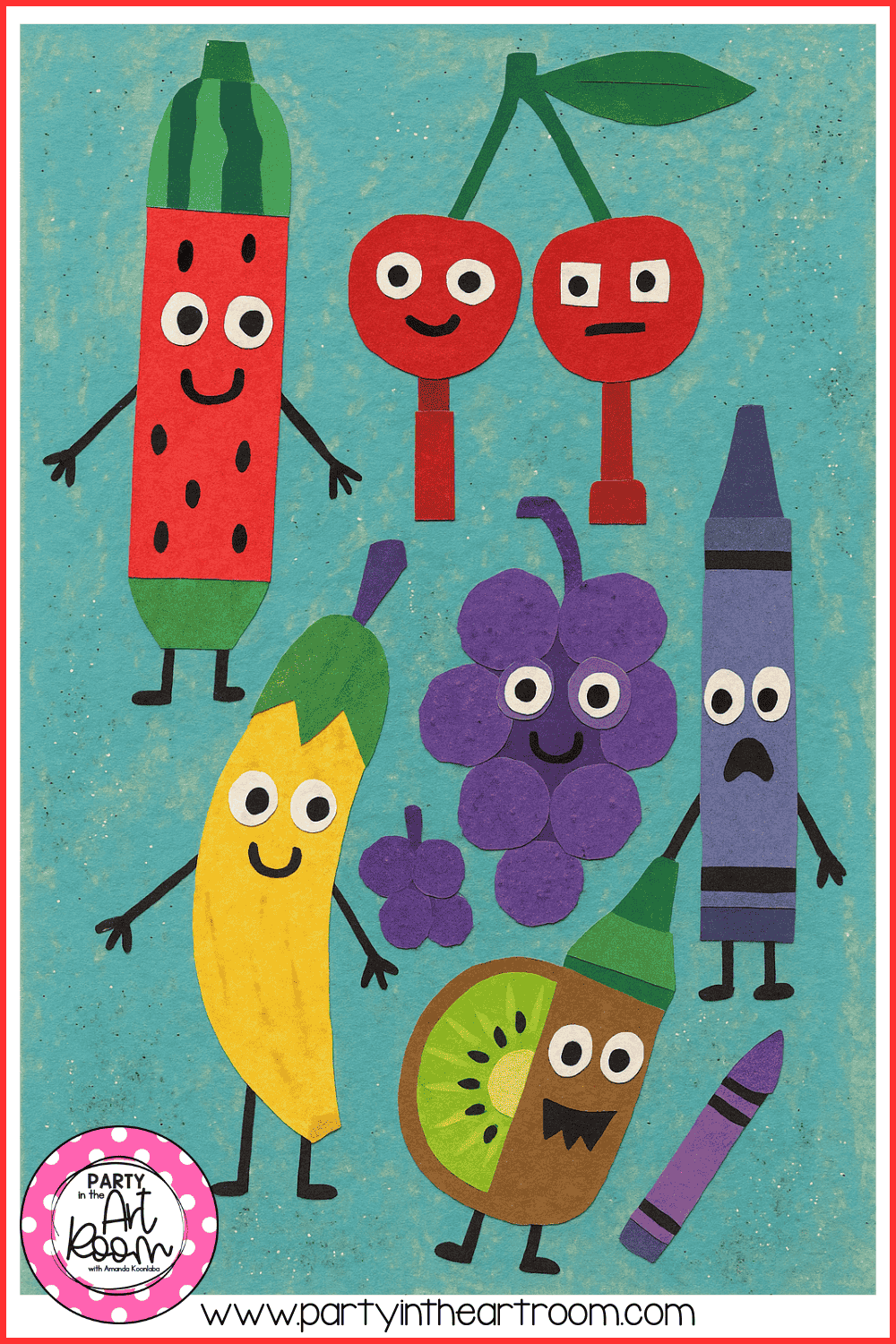
This mish mash project gives students full permission to let personality lead the design, from dramatic crayons to fruit with opinions.
Art Concepts We Snuck In There:
● Shape & form – breaking complex ideas into simple, buildable pieces
● Expression through visual storytelling – those eyes and smiles tell a story!
● Texture & layering – collage, paint, tissue, marker… all mixed together
● Contrast – bold colors on bright yellow backgrounds for a serious pop
Why This Project Works:
Let’s be real — sometimes kids need to get a little silly. This lesson gave them just enough structure to feel successful and just enough freedom to get weird. The mix of fruit and crayons was unexpected (which kept it fun), but the repetition of materials and character design gave them confidence.
Plus, they loved that it was based on a “real” artist’s work — mine! We even talked about how artists can be inspired by their own everyday doodles and turn them into full-on masterpieces. Or at least, classroom classics.
Try a Mish Mash Lesson in Your Room
Materials you'll want:
● Bright construction paper and tissue paper
● Watercolor or tempera paint
● Scissors and glue sticks
● Black markers for outlines
● Googly eyes (The bigger the better. Trust me.)
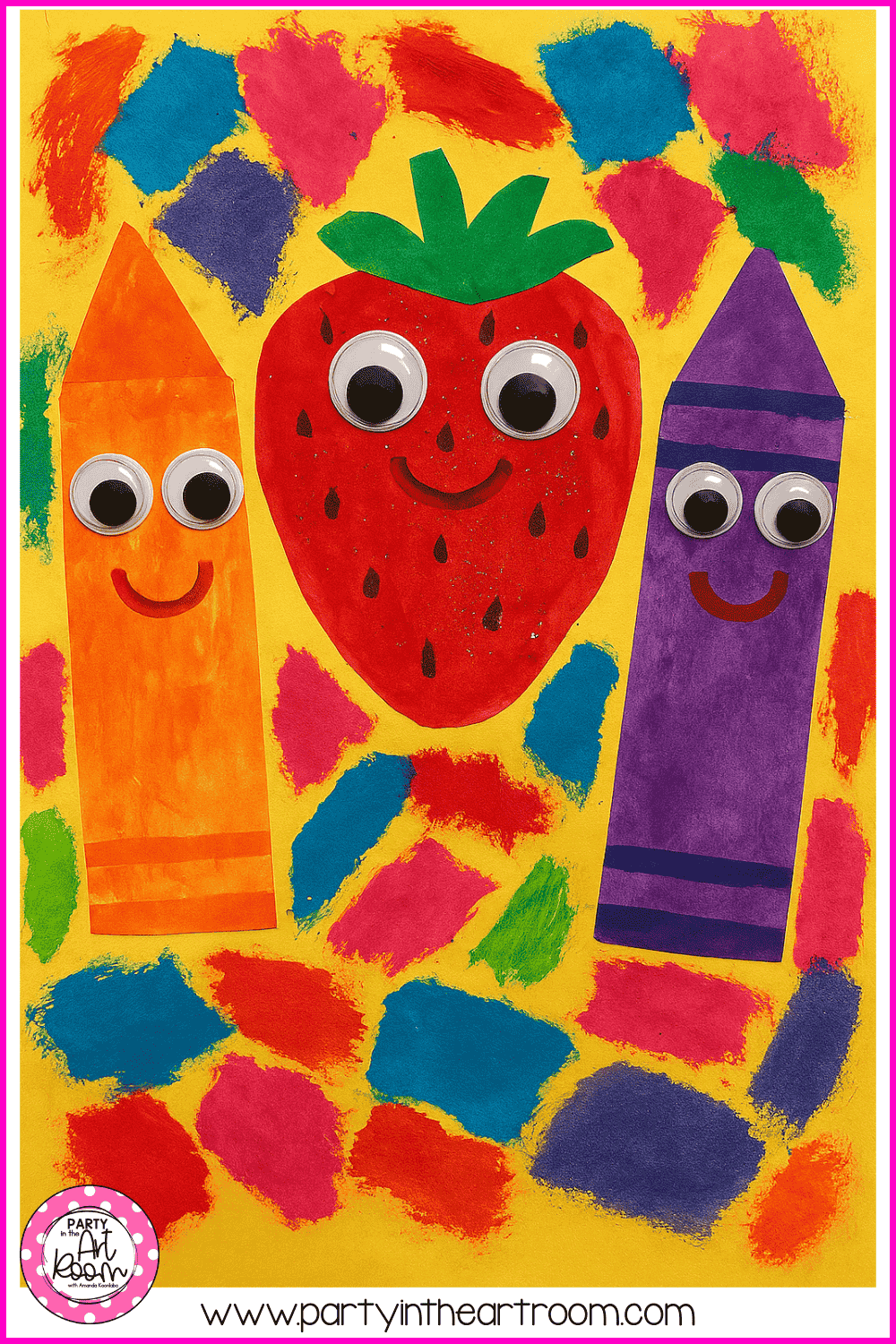
Behind the silliness is serious learning, as students practice contrast, texture, and visual storytelling through layered collage.
Want a similar lesson that’s ready to go? Try these classroom favorites:
🎨 Cow Skull Art Lesson (Georgia O'Keeffe Inspired)
Perfect for teaching character design through shape, texture, and art history mashups.
🎲 Spring Bouquet Dice Roll Game
This one’s a great companion project — bright, creative, and ideal for practicing expressive detail.
🖍️ Art Room Printables & End-of-Year Activities (TpT)
Great if you want a low-prep center activity to go along with your fruit & crayon characters.
Want More Art Ideas That Spark Joy?
Check out these related posts:
● 💜 4 Useful Tips for Art With Chalk Pastels – another joyful, messy medium your students will love
● 👩🎨 3 Famous Women Artists from the U.S. – use this to connect students’ artwork to real-life artists
● 🎨 How to Make Sparkle Heart Art – because who doesn’t love shiny, glittery feelings?
If your students need a creative reset (or you just need to smile), this is your go-to lesson. Let the fruit get funky. Let the crayons emote. Let the googly eyes do their thing.
Because sometimes, art should just be happy.
You Might Also Be Interested In:
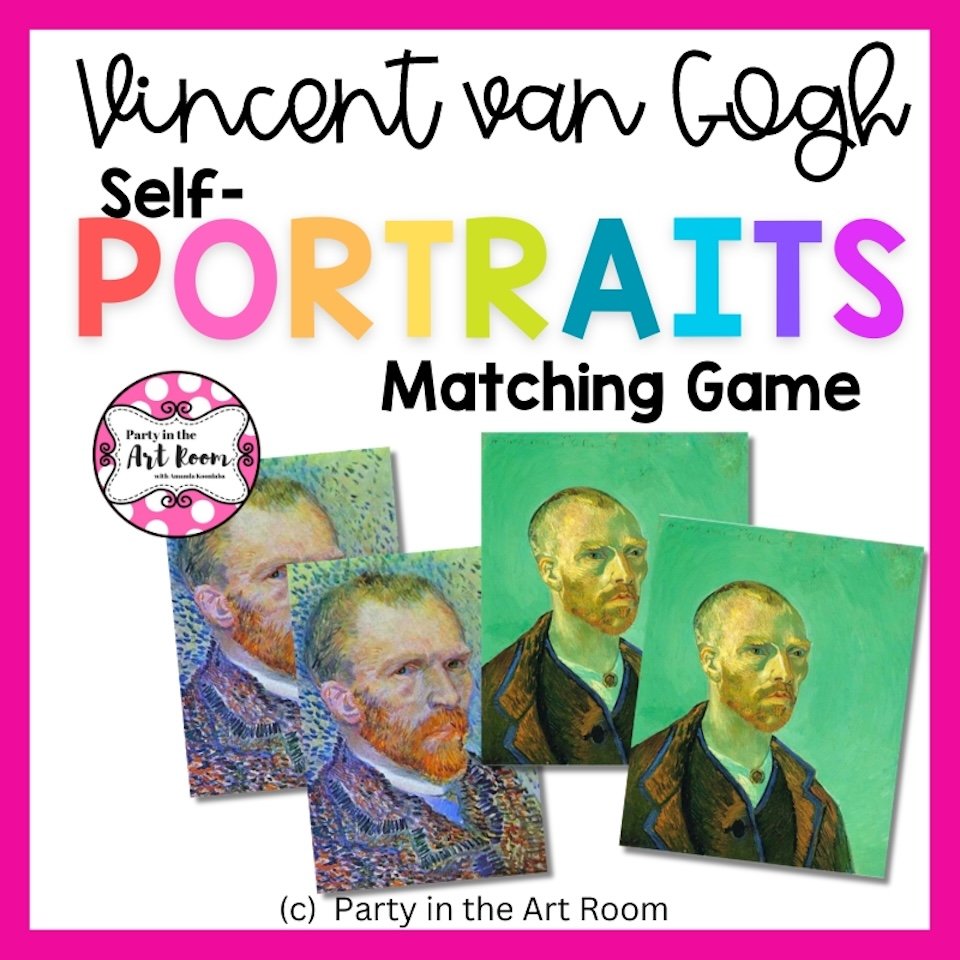
Inside this free PDF, you'll find a treasure trove of van Gogh's self-portraits, each capturing the essence of the artist's unique style and introspection. From his early works to his later masterpieces, this collection showcases the evolution of van Gogh's self-representation throughout his remarkable career.
As students pair the self-portraits, they will develop visual recognition skills, explore color and brushstroke techniques, and gain a deeper understanding of van Gogh's artistic journey.

Check out discounts, deals, and recommendations on all our artsy faves!
Affiliate Disclosure: Party in the Art Room is supported by its audience. When you purchase through links on this site, a commission may be earned.
Get to know Amanda Koonlaba!
Hi! I’m Amanda. Teaching children to be creative thinkers is my greatest joy. I’m here to help you bring that same joy to your classroom.

This guide is packed with 25 ideas for using art to teach math and ELA. It’s arts integration for the win!
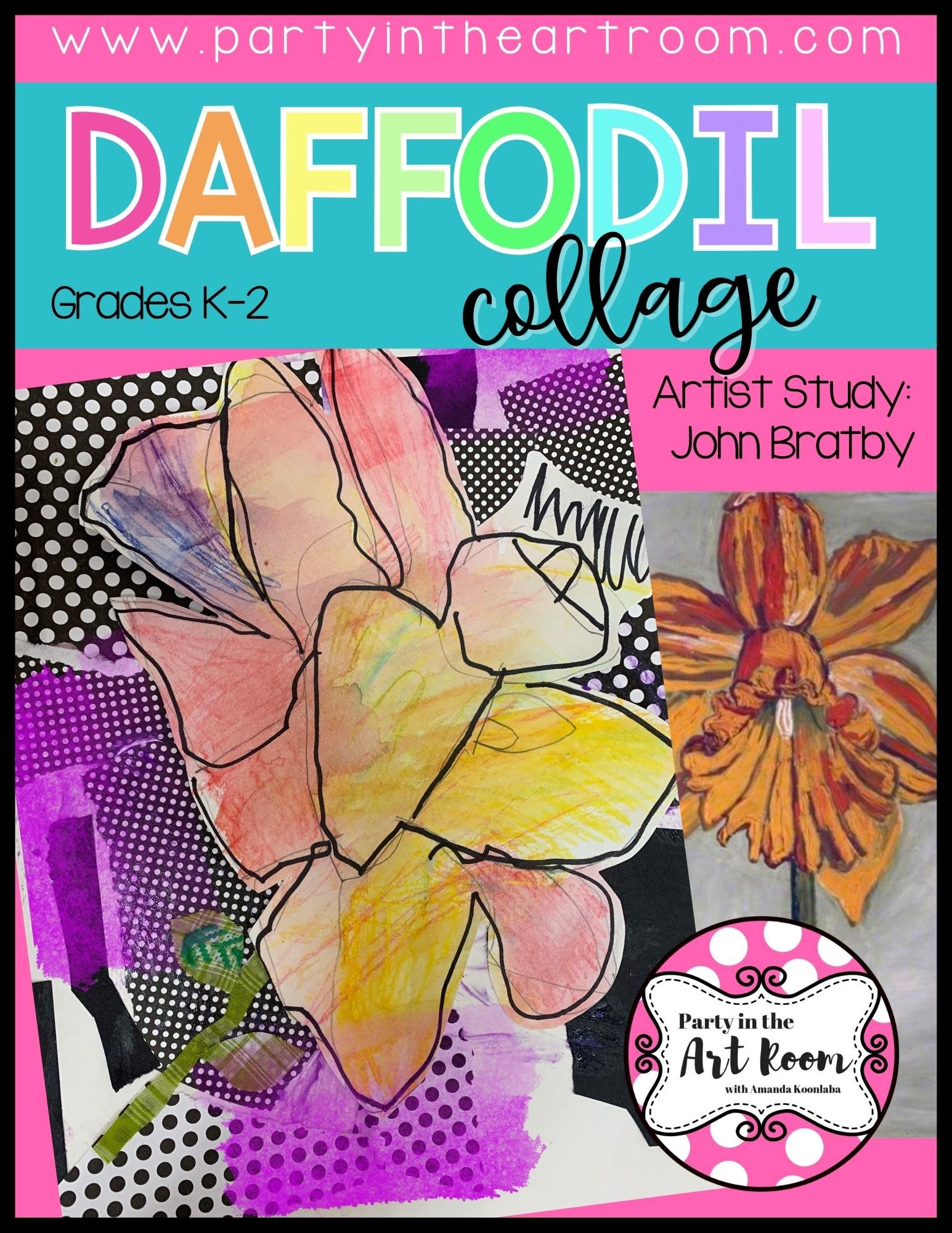
I want all students to feel successful in the art room, so I created a standards-based Daffodil Collage lesson to do just that! The lesson includes an artist study, student reflection, and more, so push your artists to their full potential.


Are you planning an abstract art lesson inspired by Paul Klee? Are your students going to create abstract portraits? Here’s an engaging and vibrant lesson to enhance your curriculum! This resource is an ideal addition to your elementary art plans, bringing creativity and excitement to your classroom.
Between 1927 and 1930, Edward Hopper painted two landscapes. These landscapes featured the Two Lights lighthouse in Cape Elizabeth, Maine. His play of sunlight and shadow across the buildings offered rich formal possibilities. For this art teacher, I saw the possibilities of offering my 5th grade art students a lesson they would remember.