My Favorite Tools for Creating Art Lessons at Home
Let’s just go ahead and say it: teaching art at home is a whole different vibe. There are dogs barking, dishes in the sink, and at least one child asking for a snack every five minutes. And in the middle of that chaos, you're trying to make something creative and meaningful happen.
So here's the good news: you do not need a Pinterest-worthy studio to teach art at home. You just need a few tried-and-true supplies that work across age levels, don’t make you cry when spilled, and actually encourage your kids to stay engaged.
Whether you're a homeschooling parent or an art teacher setting up take-home kits or remote lessons, this list is for you.
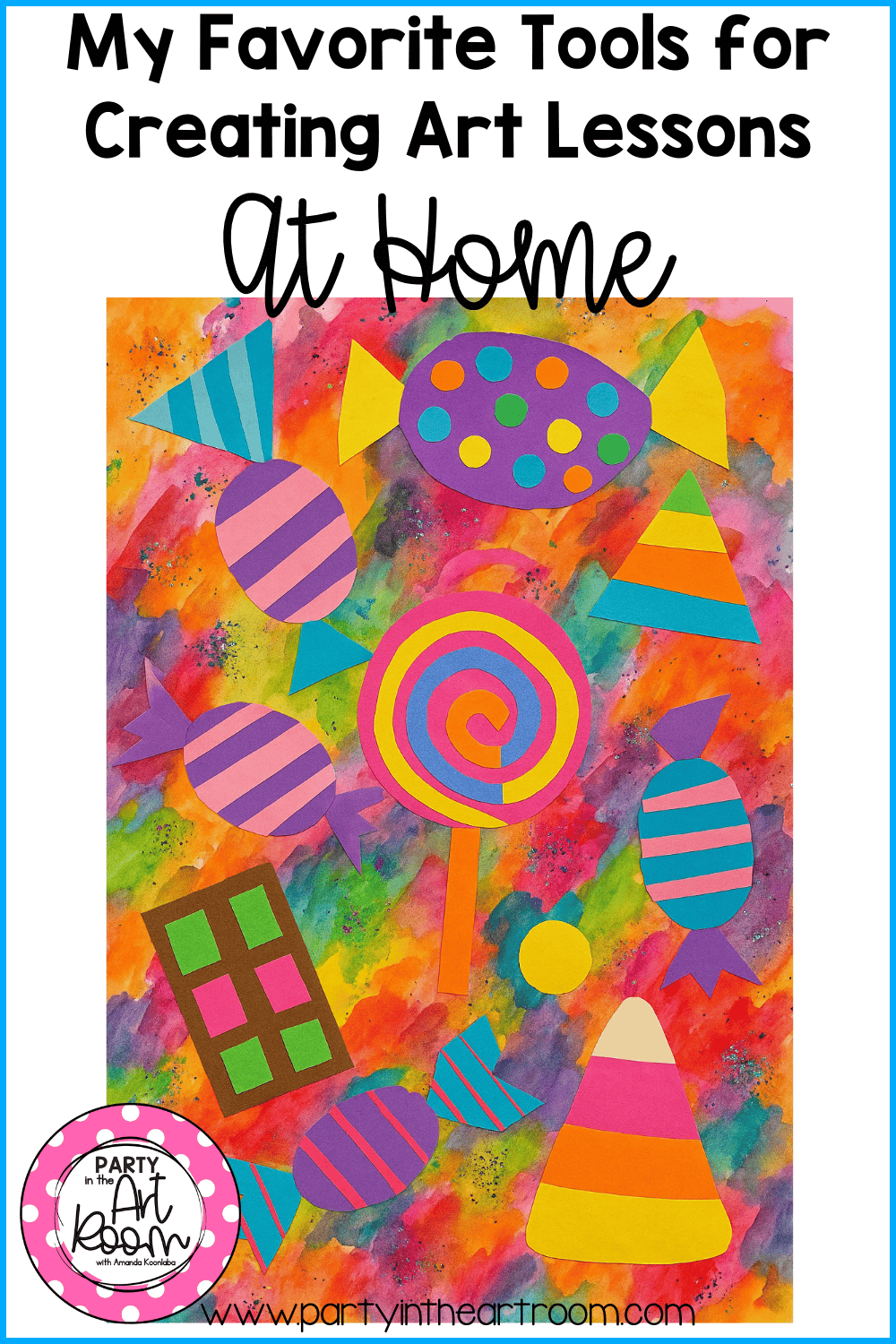
Art at home should feel inviting and playful—colorful supplies and a sense of fun matter more than a perfectly organized space.
🖍️ 1. Oil Pastels
If you’ve been around here for five minutes, you already know I love me some oil pastels. They’re bold, creamy, and super satisfying to use. They’re also versatile enough for everything from simple shape drawings to layered mixed media pieces.
🛒 I recommend this affordable student-quality set—they blend well, show up beautifully on dark paper, and don’t break the bank.
For extra fun (and a super wow effect), blend with a Q-tip and a dab of baby oil. Your students will feel like professional artists.
🎨 Lesson Idea:
Try this: How to Quickly Use Oil Pastels More by Drawing Cows with Basic Shapes. It’s playful, accessible, and works for any elementary level.
📄 2. Black Construction Paper or Tagboard
Let me tell you—black paper is the unsung hero of the art room. Everything pops against it. Kids instantly feel like their work is more “serious,” and it hides smudges and fingerprints like a dream.
🛒 For something even more durable, grab this true black tagboard. It doesn’t have that sad gray undertone and works great with all sorts of media.
🛒 Want a grab-and-go pack? This combo set of black and white construction paper is a great deal and super handy to keep around.
🎨 3. Tempera Cakes
These tempera cakes are my go-to for no-fuss painting days. There’s no pouring, no leaking, and zero crying over spilled paint (from kids or adults). Just add water and go.
They work well for color mixing, resist techniques, and quick whole-class projects—and they last forever.
🎨 Lesson Idea:
Use them in this sweet and silly Toadstool Mushroom Painting Project. It’s low prep but looks high impact.
🎲 4. Dice Roll Drawing Games
This is where art meets gamification—and it’s a lifesaver when kids say, “I don’t know what to draw.”
Each roll of the die determines a feature to draw: eyes, shapes, background textures, etc. It gets kids creating without pressure, and often leads to unexpected masterpieces.
🛒 You can even pair this with a workbook like the Drawing Practice Workbook which uses the same structure.
🎲 Lesson Idea:
One of my faves is the Cow Skull Dice Roll Game. It’s got art history, structure, and creative silliness in one beautiful package.
📚 5. Picture Books
Books are one of the easiest ways to introduce big ideas, connect emotions, or just calm the energy before diving into a project.
Pair stories with themed art prompts:
● “The Very Hungry Caterpillar” → symmetrical butterflies
● “Swatch: The Girl Who Loved Color” → color mixing experiments
● “Snowflake Bentley” → radial design prints
📖 Need help finding great titles? Here are 3 Children’s Lit-Based Art Projects You Need to Know.
🧴 6. Glue—The Good Kind
You’re going to need two kinds:
🛒 Elmer’s School Glue for basic stuff.
🛒 Tacky Glue for fabric, foil, cardboard—anything with weight.
And if you’re doing black glue outlines? Go for Elmer’s Glue-All. It dries faster and holds its shape better than regular school glue.
✨ Tip: Add a dab of black acrylic paint to Glue-All to make your own black glue. Boom. Instant outline tool.
🖌️ 7. Durable Paintbrushes
🛒 These plastic-handled brushes are my ride-or-die. They last longer than the wooden ones, and I don’t spend my afternoons pulling loose bristles off student work.
✏️ 8. Watercolor Pencils
Perfect for soft gradients, layering, and a quieter approach to painting. These Arteza Watercolor Pencils are packed with pigment and great for multi-age teaching.
Use them for:
● Calm morning work
● Interactive sketchbooks
● Drawing + painting hybrid lessons
📓 BONUS: Best Art Workbooks for Kids
Sometimes you just need a workbook to hand to a kid and say, “Here, start with this while I get the paint out.” These are actually good. Like, engaging and educational at the same time.
For Upper Elementary + Middle School:
● Intro to Art for Kids: Full-color masterpieces, artist bios, and reflection questions. Perfect for ages 9–13.
● Middle School Visual Art Workbook: Reinforces techniques like shading, symmetry, and color theory.
For Creative Prompts:
● Drawing Practice Workbook: Includes step-by-step, freestyle, and dice-roll prompts—ideal for stations or early finishers.
For Littles Working on Fine Motor Skills:
● Preschool Fine Motor Skills Workbook: Great for tracing and drawing lines, shapes, and simple pictures.
● Scissors & Cutting Practice Workbook: So good for pre-K and kinder. Helps build control with safe scissors and fun patterns.
✨ Want some additional help building fine motor skills? Try this post: 5 Ways to Build Your Child’s Fine Motor Skills Before They Begin School
🔗 Want a Full Art Lesson to Try Right Now?
All stocked up and ready to go? Here are three projects that pair beautifully with these supplies:
Toadstool Mushroom Painting – Uses tempera, black paper, and pastel techniques.
Snazzy Snail Art – Great for exploring shape and pattern.
Preschool Spring Activities – If you’re working with littles, this one’s for you.
🧡 Final Thoughts
You don’t need a massive supply budget, a rainbow wall of materials, or 25 perfectly prepped trays. You just need a few tools that work hard and help kids explore.
The supplies in this post are the ones I come back to year after year because they make teaching easier, not harder. And they invite kids into art-making that’s flexible, joyful, and full of possibilities.
You’ve got this.
And if you ever feel stuck, there’s a whole archive of ready-to-go lessons waiting for you over on the blog.
You Might Also Be Interested In:
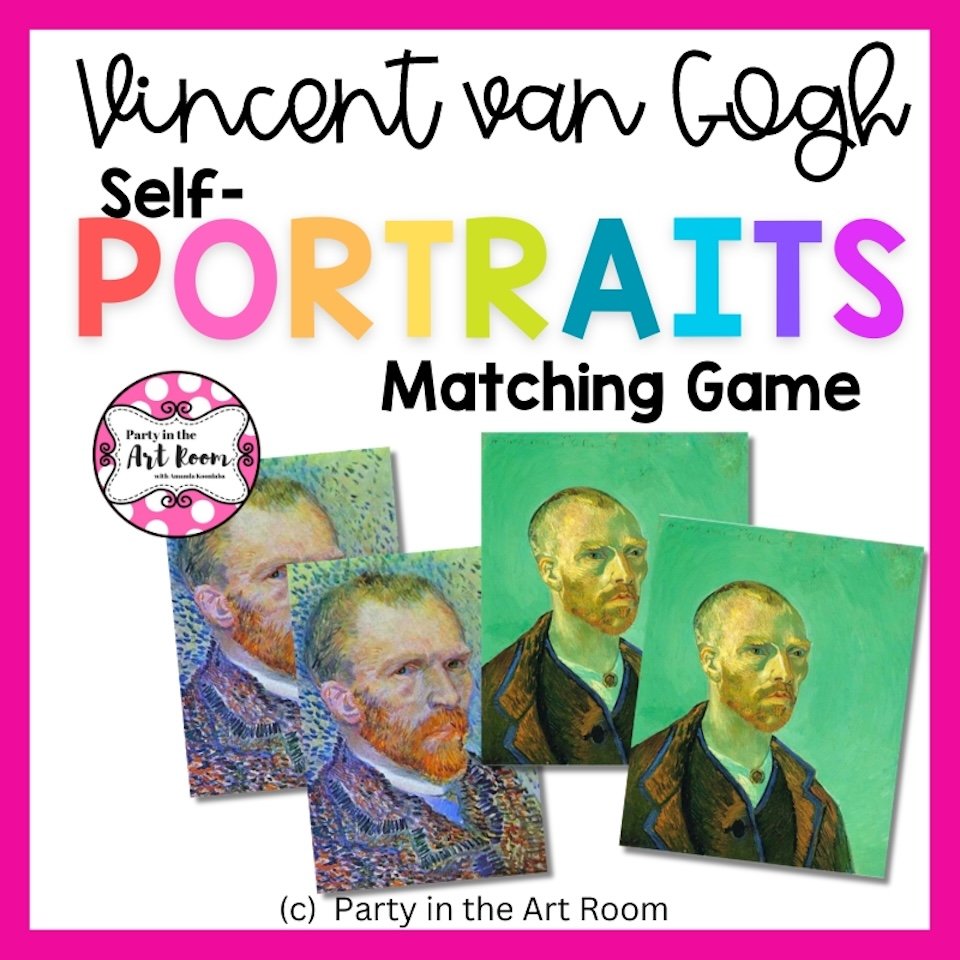
Inside this free PDF, you'll find a treasure trove of van Gogh's self-portraits, each capturing the essence of the artist's unique style and introspection. From his early works to his later masterpieces, this collection showcases the evolution of van Gogh's self-representation throughout his remarkable career.
As students pair the self-portraits, they will develop visual recognition skills, explore color and brushstroke techniques, and gain a deeper understanding of van Gogh's artistic journey.

Check out discounts, deals, and recommendations on all our artsy faves!
Affiliate Disclosure: Party in the Art Room is supported by its audience. When you purchase through links on this site, a commission may be earned.
Get to know Amanda Koonlaba!
Hi! I’m Amanda. Teaching children to be creative thinkers is my greatest joy. I’m here to help you bring that same joy to your classroom.

This guide is packed with 25 ideas for using art to teach math and ELA. It’s arts integration for the win!
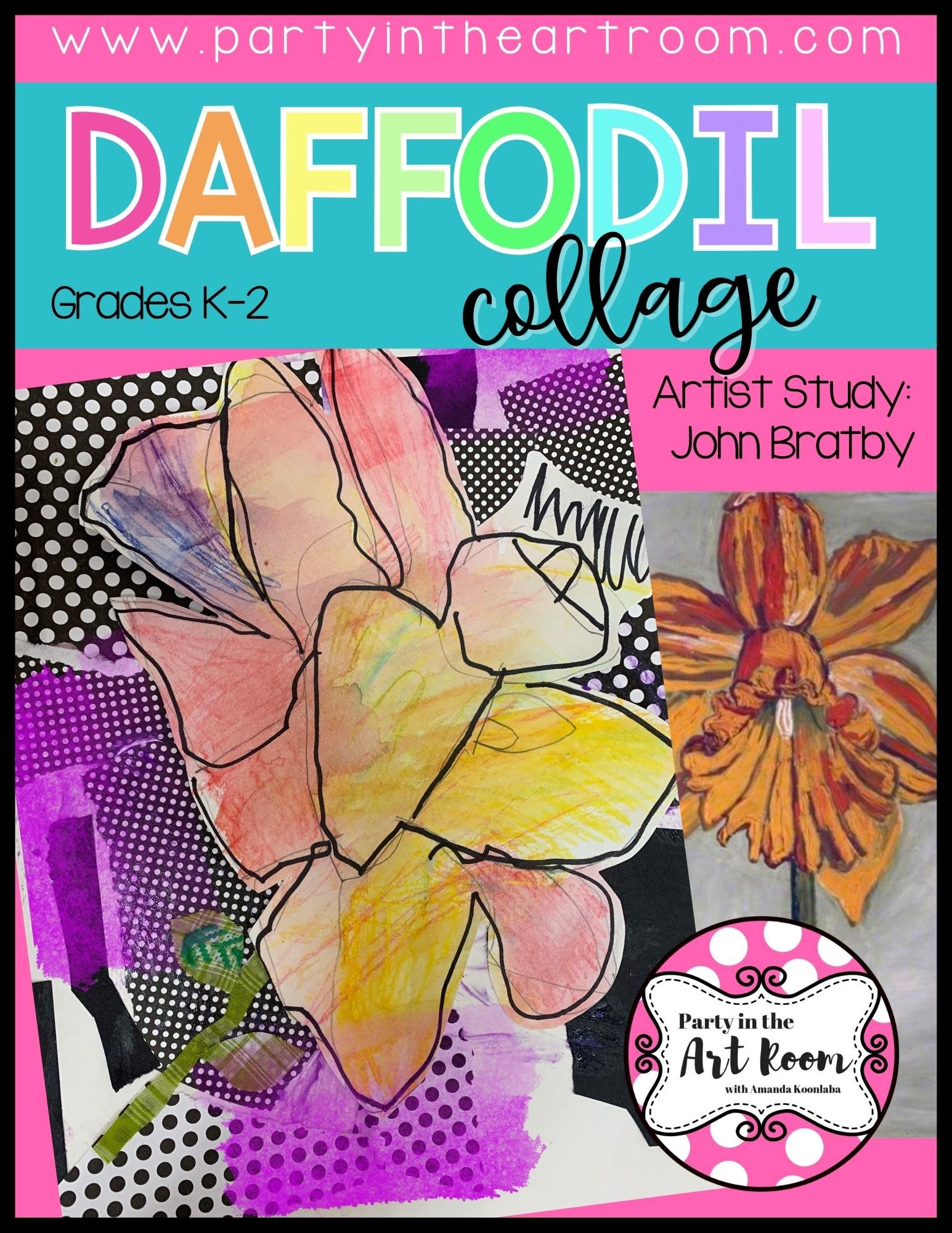
I want all students to feel successful in the art room, so I created a standards-based Daffodil Collage lesson to do just that! The lesson includes an artist study, student reflection, and more, so push your artists to their full potential.


Are you planning an abstract art lesson inspired by Paul Klee? Are your students going to create abstract portraits? Here’s an engaging and vibrant lesson to enhance your curriculum! This resource is an ideal addition to your elementary art plans, bringing creativity and excitement to your classroom.
Between 1927 and 1930, Edward Hopper painted two landscapes. These landscapes featured the Two Lights lighthouse in Cape Elizabeth, Maine. His play of sunlight and shadow across the buildings offered rich formal possibilities. For this art teacher, I saw the possibilities of offering my 5th grade art students a lesson they would remember.