Case Study: PartWhole Learning in Action
When you ask teachers to see like artists, mathematicians, and writers all at once, something wonderful starts happening.
Recently, I led a professional development workshop focused on part-whole relationships — an idea that quietly weaves through visual art, math, and ELA like a golden thread. Here’s how it went, what we learned, and why it matters more than ever.
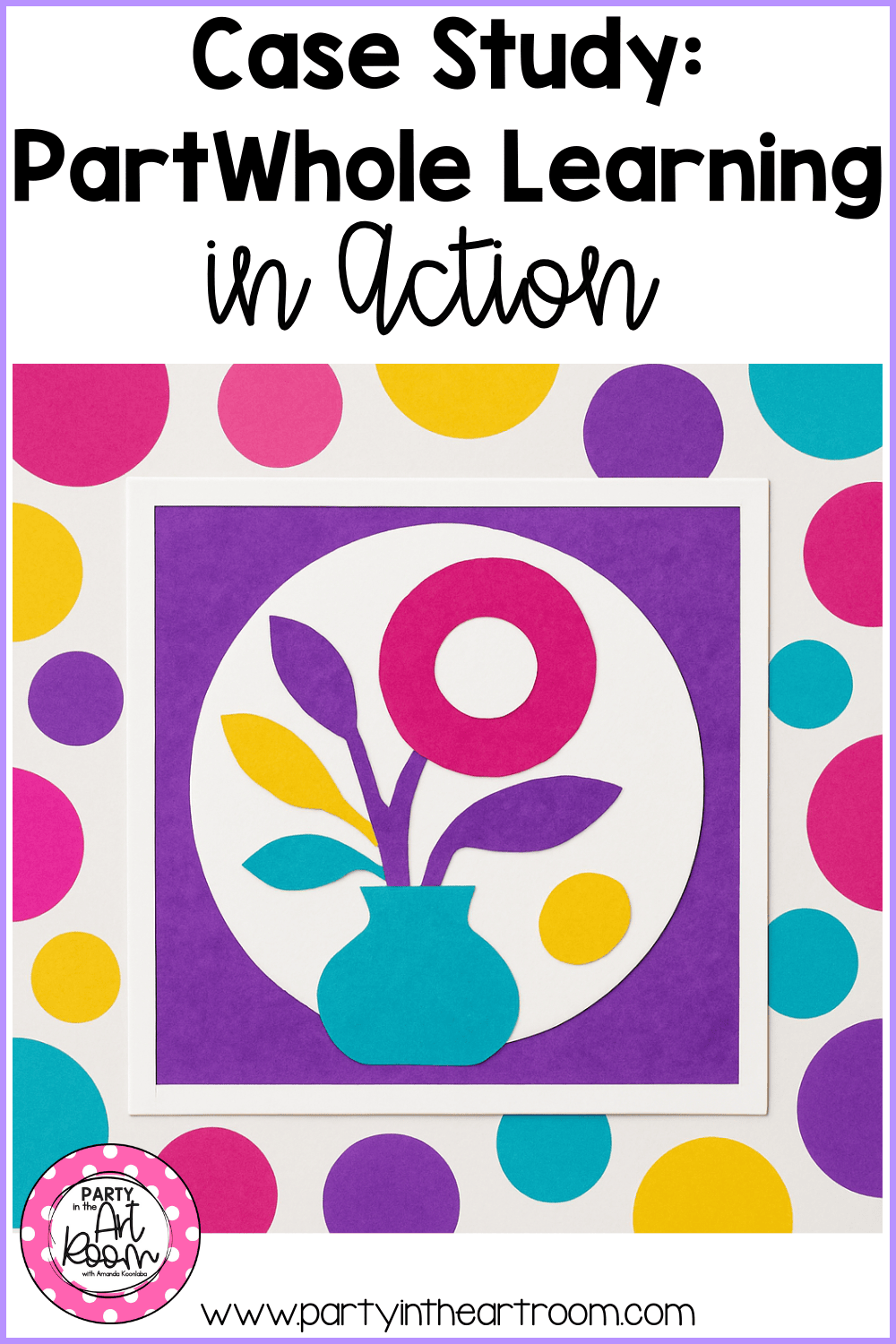
Big ideas are built from small pieces, and learning becomes richer when teachers learn to notice how those parts connect.
Setting the Stage
Our big idea was deceptively simple:
Understanding parts and wholes builds deeper thinkers.
● In art, lines build into shapes, and shapes build into forms.
● In math, parts fit together to create fractions and wholes.
● In ELA, supporting details gather and climb toward a main idea.
By anchoring our day in the visual arts first, we gave teachers a playful, intuitive on-ramp into the world of part-whole thinking.
The Flow of the Workshop
We started by exploring visual compositions, using artworks inspired by Mondrian and Matisse.
Teachers were invited to slow down and really look:
Where do you see lines becoming parts of shapes? How do those parts fit together into something bigger?
Then, we leapt into math with a project that never fails: Fraction Quilts.
Teachers created colorful quilt squares, intentionally breaking them into fractional parts — a joyful mashup of creativity and mathematical thinking.
(Want to try it yourself? Grab the Fraction Quilts Complete Lesson here.)
Finally, we pivoted to reading, using Last Stop on Market Street by Matt de la Peña to explore how small details work like threads weaving into a story’s main idea.
Key Takeaways
● Visual First:
When we start with art, part-whole relationships become something we feel — not just something we memorize.
● Organic Crossovers:
Teachers quickly noticed how naturally the concepts in art, math, and ELA overlapped — no clunky bridges or forced activities.
● Permission to Play:
By staying exploratory (and a little messy!), teachers found freedom to take risks in how they teach across content areas.
If you want a deeper dive into this approach, you’ll love these posts too:
● Arts Integration Made Easy: How to Turn Fractions into Percentages Using Fraction Quilts
● 3 Benefits of Using Art to Teach Hard Math Concepts Like Fractions and Decimals
● Arts Integration: Teaching Math Through Art
Why It Mattered
One teacher said,
"I've taught fractions for years, but this is the first time it felt beautiful."
Another reflected,
"Seeing a story as a collage of details changed how I think about teaching reading."
That’s the magic of part-whole learning.
When students (and teachers) see the structure behind creativity, math, and language, they're not just absorbing information.
They're building something new.
Want to Try It?
● Start with a Fraction Quilts Project (it's teacher-tested and seriously delightful!).
● Explore visual part-whole relationships before launching into math or ELA.
● Break apart a story with your students and ask, "How do all these little pieces create something bigger?"
If you’re ready for more ready-to-go goodness, check out:
● Decomposing Fractions Visual Art + Math Lesson Plan
🎨 Final Thought:
Teaching part-whole thinking through art isn’t just creative — it’s transformative.
It’s where big ideas, beautiful mistakes, and deep understanding meet in the middle.
You Might Also Be Interested In:



Expand Creativity with Symmetry Drawing Worksheets
Dive deeper into symmetry with our specially designed symmetry drawing worksheets. These engaging activities challenge students to complete intricate designs while honing their understanding of symmetrical balance. Perfect for classrooms or homeschool settings, these worksheets make learning symmetry both fun and artistic.

Shop Workbooks on Amazon
Affiliate Disclosure: Party in the Art Room is supported by its audience. When you purchase through links on this site, a commission may be earned.
Get to know Amanda Koonlaba!
Hi! I’m Amanda. Teaching children to be creative thinkers is my greatest joy. I’m here to help you bring that same joy to your classroom.

This guide is packed with 25 ideas for using art to teach math and ELA. It’s arts integration for the win!
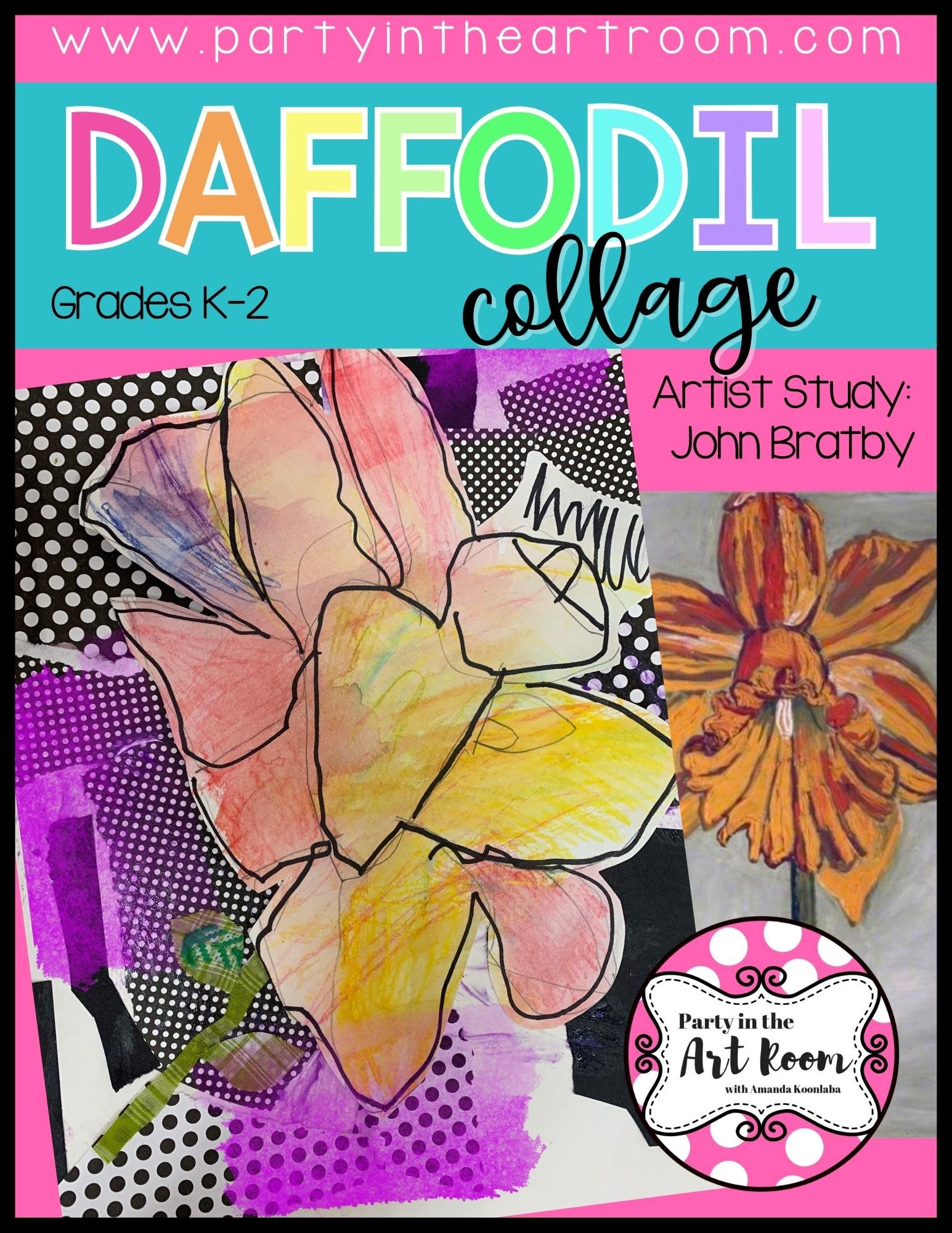
I want all students to feel successful in the art room, so I created a standards-based Daffodil Collage lesson to do just that! The lesson includes an artist study, student reflection, and more, so push your artists to their full potential.


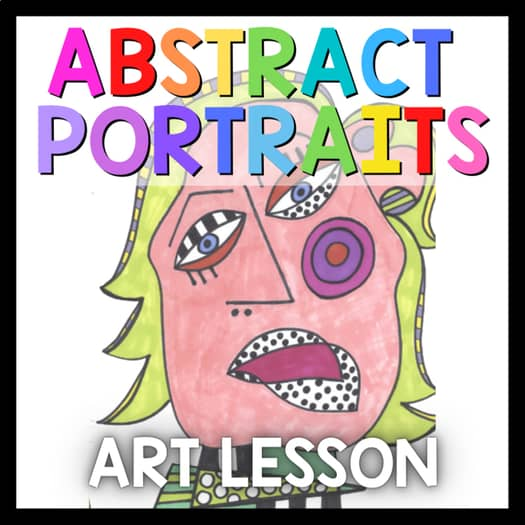
Are you planning an abstract art lesson inspired by Paul Klee? Are your students going to create abstract portraits? Here’s an engaging and vibrant lesson to enhance your curriculum! This resource is an ideal addition to your elementary art plans, bringing creativity and excitement to your classroom.
Transform simple brushstrokes into expressive watercolor portraits with Party in the Art Room's playful face-painting techniques that build confidence and creativity.
Watch colors bloom and blend as you create unique watercolor faces using approachable techniques perfect for any skill level. This bonus lesson extends your Lemon Tree course journey with step-by-step video instruction that makes portrait painting feel effortless and fun.
Step-by-step video instruction
Color blending techniques
Expressive portrait methods
Builds on Lemon Tree course
All skill levels welcome
Unlike intimidating portrait tutorials, this lesson encourages experimentation with playful techniques that celebrate imperfection - perfect for discovering your unique artistic voice.
Add to Cart for watercolor creativity.